





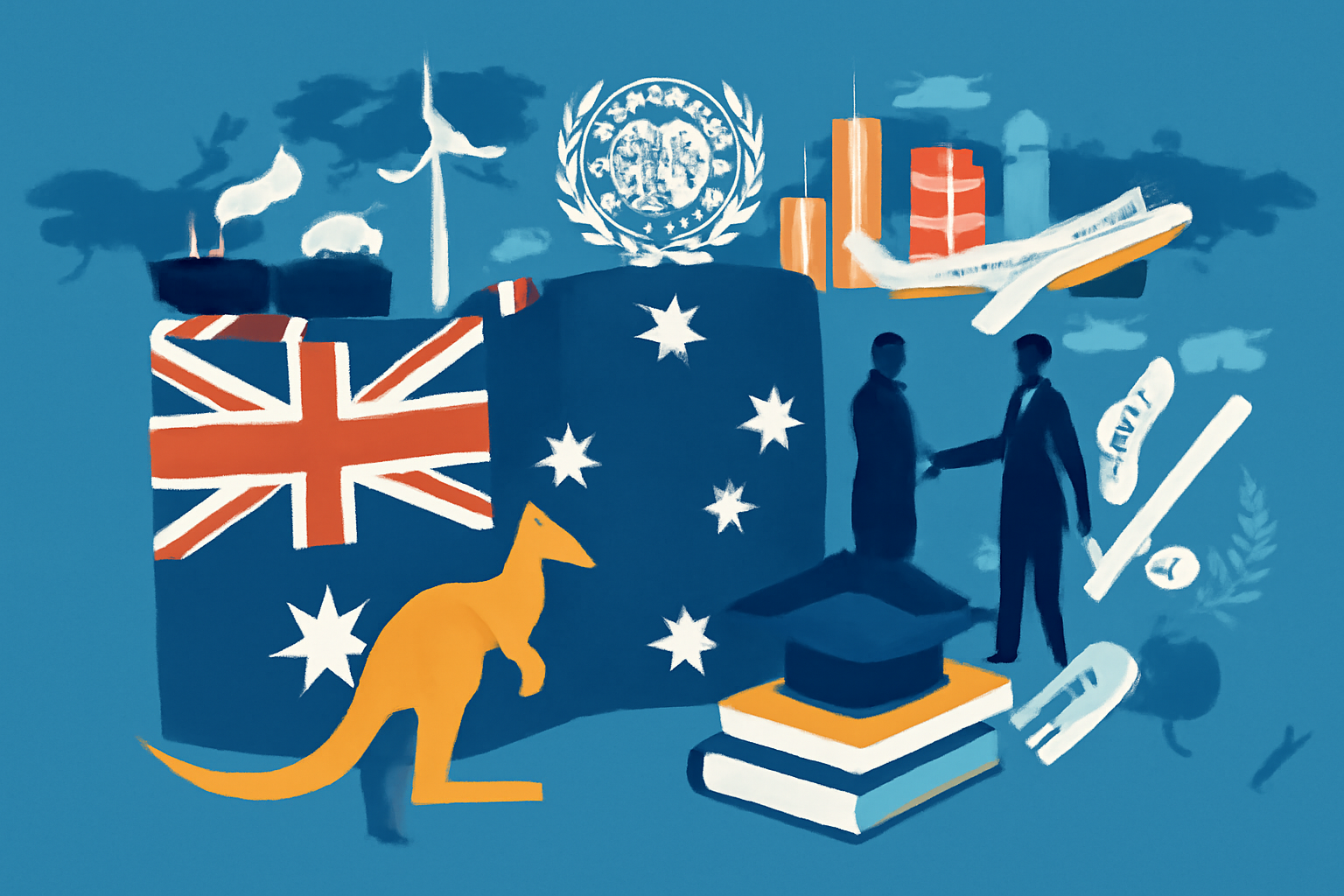
Australia, while geographically distant from many world powers, wields considerable influence in global affairs. The nation’s economic strength, diplomatic initiatives, strategic alliances, and cultural impact have positioned it as a critical actor in shaping international developments. Despite its relatively small population, Australia has proven to be a formidable player on the world stage, contributing to peacekeeping, trade, security, and environmental sustainability.
Australia’s economic prowess plays a crucial role in its global influence. The country is one of the world’s largest exporters of raw materials such as coal, iron ore, and natural gas. These resources are essential to many of the world’s economies, especially in Asia. Australia’s solid trade relations with key global players, such as China, Japan, and the United States, bolster its economic influence and ensure that it is a vital player in international markets. Additionally, Australia’s strong economy is backed by a commitment to free trade, with several bilateral and multilateral trade agreements, including its participation in the Asia-Pacific Economic Cooperation (APEC).
Diplomatically, Australia plays an active role in a variety of international organizations. The country is a committed member of the United Nations, contributing to peacekeeping missions, humanitarian aid, and advocating for global stability. Australia is also involved in multilateral dialogues on global issues such as human rights, international law, and conflict resolution. Through its involvement in organizations like the World Trade Organization (WTO) and the G20, Australia works to promote international cooperation and economic growth.
In the realm of security, Australia’s alliances are key to its global standing. The ANZUS Treaty, which secures defense ties with the United States, is a cornerstone of Australia’s defense policy. This relationship enhances Australia’s role in maintaining peace and stability in the Indo-Pacific region, an area of growing geopolitical importance due to rising tensions and competing interests. Australia also partners with other regional powers such as Japan and India to promote security and prosperity in the region.
On the environmental front, Australia has made significant strides in addressing climate change, despite some challenges domestically. As a signatory to the Paris Agreement, Australia has committed to reducing its carbon emissions and investing in renewable energy technologies. The country’s leadership on environmental issues is particularly important, as it works to balance economic growth with sustainable practices, while also advocating for global action on climate change.
Culturally, Australia has a strong global presence through its entertainment, educational institutions, and sporting achievements. Australian movies, music, and television shows are enjoyed worldwide, contributing to the country’s soft power. Additionally, Australia’s universities are internationally renowned, attracting students from all corners of the globe, which further strengthens the country’s cultural and intellectual influence. Australia’s sporting successes, particularly in the Olympics and cricket, also enhance its global image, fostering international goodwill and recognition.
Australia’s diverse contributions to the world demonstrate that despite its size and geographic isolation, it is a force to be reckoned with in international relations. Its role in global trade, diplomacy, security, and cultural exchanges will continue to grow as it navigates the complexities of the 21st century.