






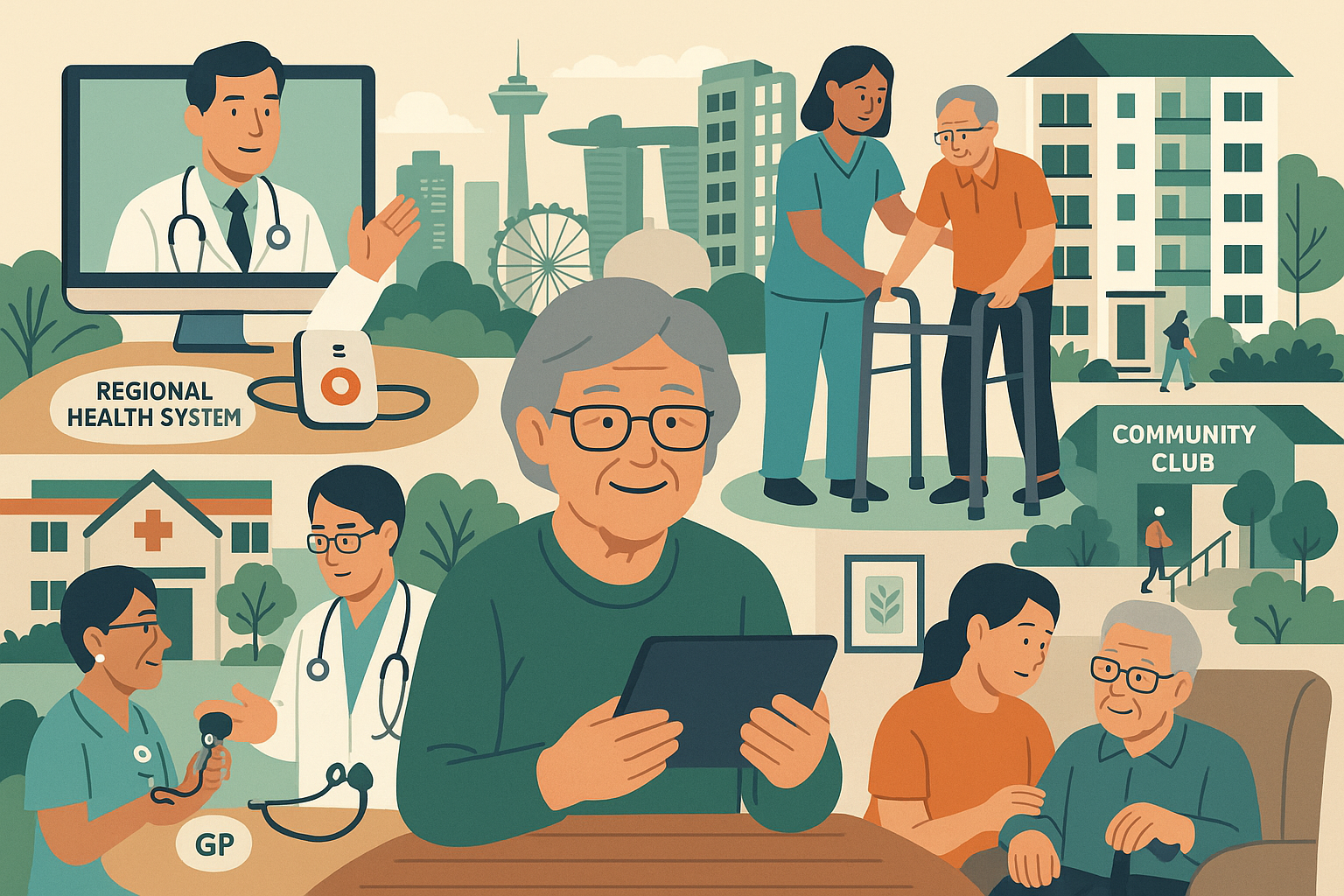
Singapore’s health policy is often cited as a model of how a small country can maintain a healthy population without allowing costs to spiral out of control. At the heart of the system is the idea of shared responsibility between the government, individuals, and employers. Rather than offering completely free healthcare, Singapore encourages citizens to plan ahead, save, and use services wisely. This design aims to balance accessibility with financial sustainability.
The financing structure rests on three main pillars: MediSave, MediShield Life, and Medifund. MediSave is a compulsory medical savings account into which workers and employers contribute a portion of monthly income. These funds can be used to pay for hospitalisation, certain outpatient treatments, and healthcare for immediate family members. MediShield Life is a basic health insurance scheme that offers protection against large hospital bills and costly treatments, covering all Singaporeans for life, including those with pre-existing conditions.
Medifund functions as a safety net for citizens who still cannot afford care even after using MediSave and MediShield Life. It is essentially an endowment fund set up by the government to support those in financial difficulty. Hospitals and institutions tap into Medifund to help patients who meet certain criteria, ensuring that no one is denied essential care purely because of money. This layered approach enables Singapore to support vulnerable groups without fully socialising all costs.
Beyond financing, Singapore’s policies place strong emphasis on primary care and prevention. Polyclinics and general practitioners act as the first point of contact, providing vaccinations, screenings, and chronic disease management. National campaigns encourage regular health checks, healthy eating, and physical activity, reflecting the belief that preventing disease is more cost-effective than treating advanced illness. These efforts are especially important as the country faces rising rates of diabetes, hypertension, and other lifestyle-related conditions.
The government has also launched the Healthier SG strategy, which aims to shift the system further towards preventive care and community-based management. Under this initiative, residents are encouraged to enrol with a family doctor who will coordinate their long-term care. Personalized care plans, health coaching, and digital tools are used to track progress and motivate healthier behaviour. By strengthening the relationship between individuals and primary care providers, policymakers hope to reduce hospital admissions and improve quality of life.
Digital health plays a growing role in making the system more efficient. The National Electronic Health Record (NEHR) allows authorised healthcare professionals to access a patient’s medical history across different institutions. This reduces duplication of tests, improves coordination, and can lead to faster, more accurate treatment. Telemedicine services, mobile apps, and remote monitoring are gradually being integrated, especially for chronic disease patients and older adults.
Singapore’s experience during health crises has further shaped its policies. Lessons from the SARS outbreak and the COVID-19 pandemic led to stronger surveillance, clearer communication strategies, and robust public health measures. Contact tracing, quarantine protocols, and social responsibility—such as mask-wearing and vaccination—were essential in controlling outbreaks. Overall, Singapore’s health policy illustrates how careful planning, individual accountability, and targeted public support can work together to maintain a high level of public health in a cost-conscious way.