



Globalization in the Philippines is not just an abstract economic term; it is something people feel from the moment they wake up. Many Filipinos start their day checking social media platforms owned by foreign companies, reading news from international sources, and chatting with relatives working abroad. Imported products fill supermarkets, from Korean noodles to American snacks, subtly influencing daily choices and tastes. At the same time, global trends in fashion, music, and entertainment shape how people dress, talk, and spend their time. The world feels closer, and this closeness reshapes the rhythm of ordinary life.
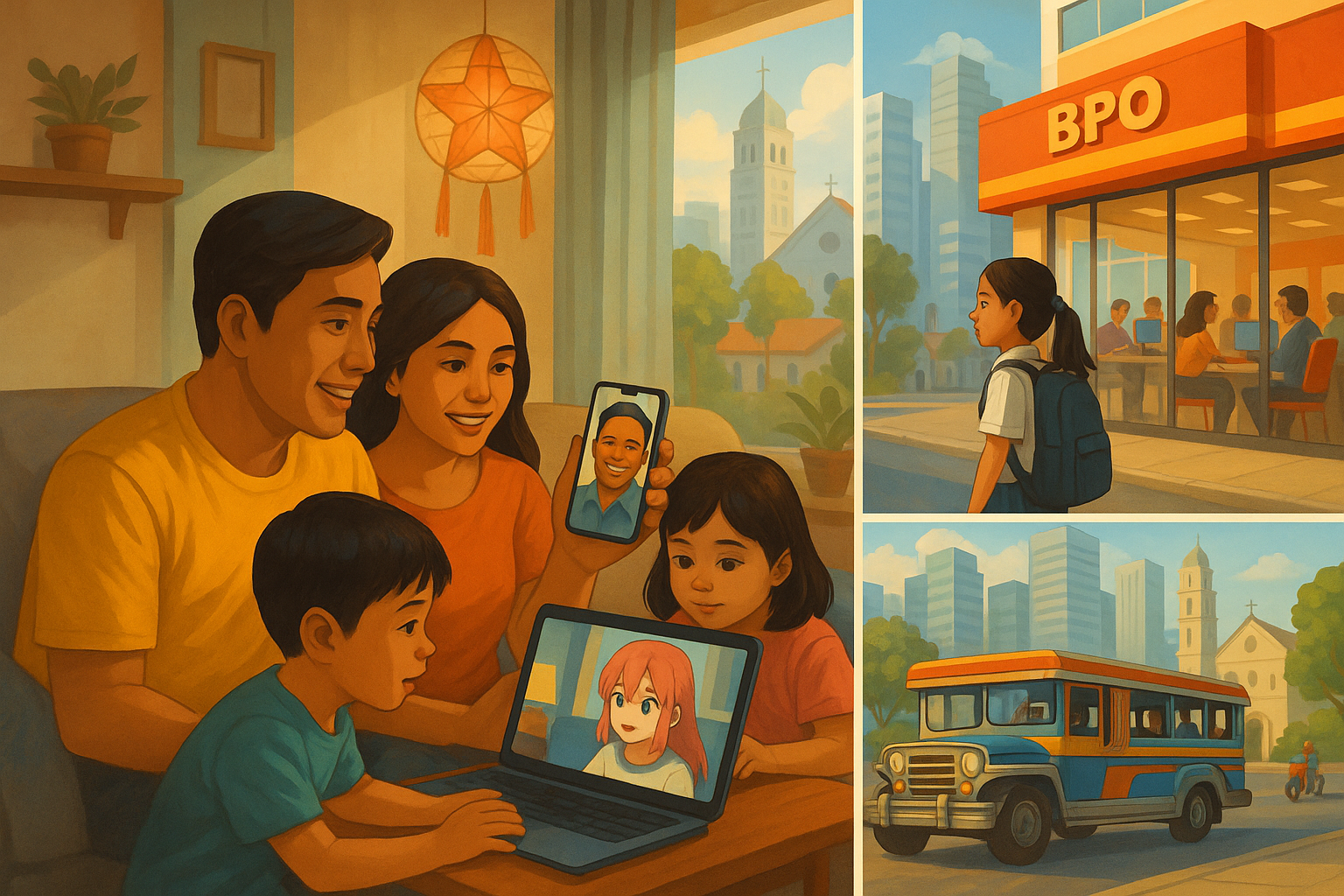
One of the most visible impacts of globalization is the transformation of work. The rise of business process outsourcing (BPO) companies and call centers has created thousands of jobs, especially in urban areas like Metro Manila and Cebu. Young professionals now work night shifts to match time zones in the United States or Europe, changing sleep patterns, family routines, and even health habits. English fluency and digital skills become more important, opening doors for some while leaving others behind. Those who cannot adapt to these new demands may struggle to find stable and well-paying jobs.
Overseas Filipino Workers (OFWs) are another key part of this global story. Millions of Filipinos work abroad as nurses, seafarers, domestic helpers, engineers, and more. Their remittances help pay for education, housing, and daily needs back home, raising living standards for many families. However, this financial benefit comes with emotional costs: long separations, children growing up with one or both parents away, and complicated family dynamics. Globalization, in this sense, brings both opportunity and sacrifice into the heart of Filipino households.
Daily consumer behavior has also changed significantly. Shopping malls are filled with international brands, fast-food chains, and global coffee franchises. Online shopping platforms make it easy to buy products from other countries with just a few taps on a smartphone. This exposure to global products influences what people consider “modern” or desirable, sometimes weakening the appeal of local goods. At the same time, Filipino entrepreneurs use the internet to sell local products internationally, showing that globalization can support both foreign and local businesses.
Culture and identity are being reshaped as well. Korean dramas, Hollywood films, and Western pop music are widely popular, especially among younger generations. Social media trends and global memes spread rapidly, changing slang, humor, and even attitudes about relationships and success. Yet, traditional practices such as fiestas, religious processions, and family gatherings remain strong. Many Filipinos blend global influences with local values, creating a hybrid culture that is both modern and distinctly Filipino.
Globalization has also highlighted social inequalities. Those with access to quality education, technology, and urban opportunities benefit the most, while rural communities may lag behind. Internet access, for example, can greatly improve education and business opportunities, but it is still uneven across the country. Environmental concerns add another layer; industrialization, rapid urban growth, and global demand for resources affect local ecosystems and climate vulnerability. In everyday life, globalization in the Philippines is therefore a mix of benefits and challenges—bringing the world closer while testing how the country preserves its identity and ensures that progress reaches everyone.