






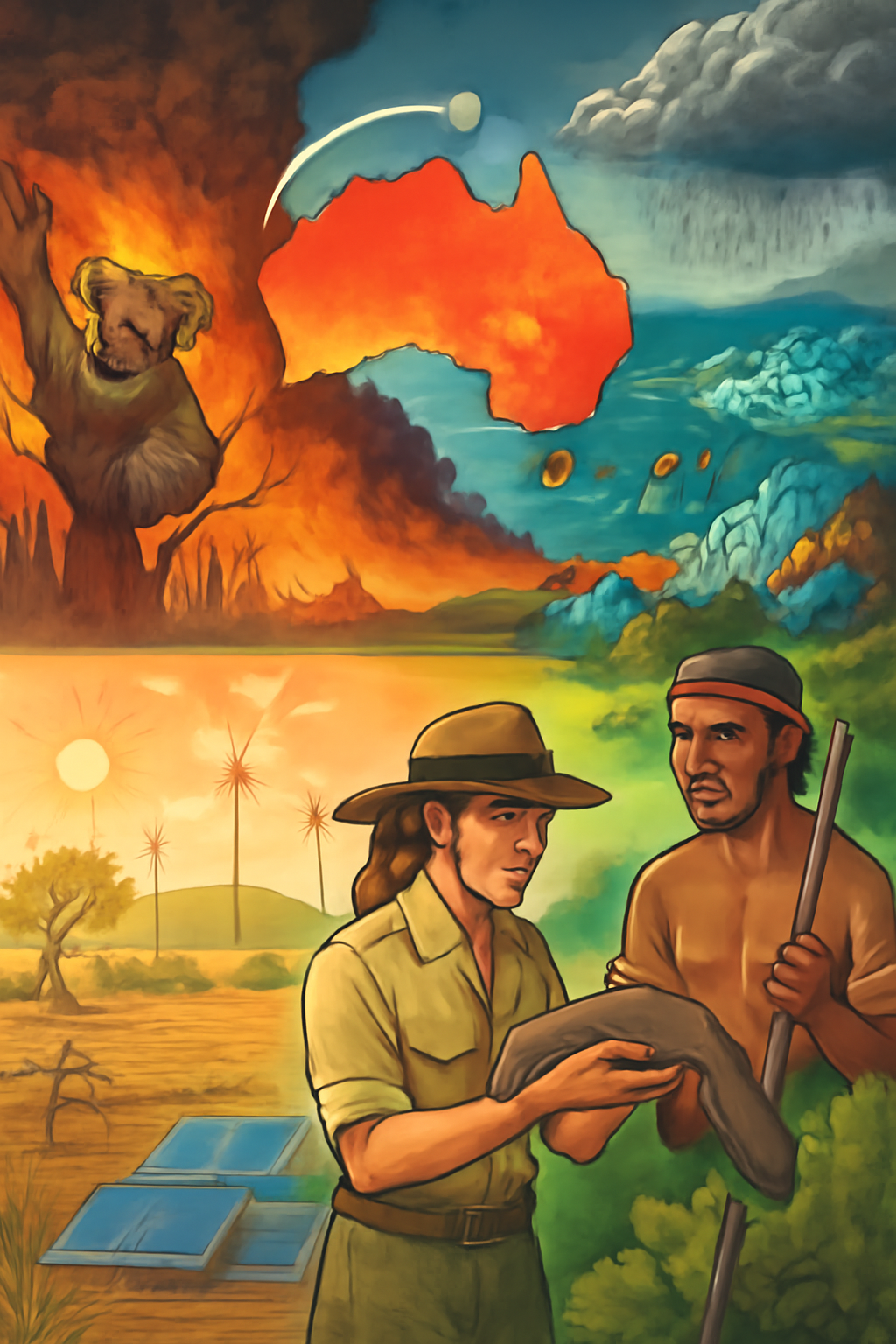
Australia, a vast and diverse country, faces a range of environmental challenges, many of which are closely tied to the effects of climate change. Due to its unique geographical location and ecological characteristics, Australia is experiencing environmental shifts that have serious implications for its biodiversity, ecosystems, and overall way of life. Among these challenges, climate change is one of the most pressing issues. The rise in average temperatures, altered weather patterns, and extreme weather events have put significant pressure on the country’s natural environment and human populations.
Climate change in Australia is most noticeable through the increased frequency and severity of bushfires, which have become a regular feature of the Australian summer. These fires have devastating impacts not only on the human population but also on the diverse range of flora and fauna. For example, the 2019–2020 “Black Summer” bushfires, one of the worst fire seasons in Australian history, resulted in the destruction of vast tracts of forest, the loss of thousands of homes, and the death of millions of animals. The fires were exacerbated by rising temperatures, prolonged droughts, and reduced rainfall, all of which are linked to global climate change.
In addition to bushfires, Australia is experiencing more intense and frequent droughts, which affect the availability of water resources in both rural and urban areas. This is especially concerning given the country’s reliance on agriculture, with farming regions suffering from depleted water supplies, while increasing salinity levels threaten soil fertility. Rising temperatures also impact the Great Barrier Reef, one of the world’s most iconic ecosystems. Coral bleaching, caused by warmer ocean temperatures, has led to the degradation of the reef, affecting marine life and the tourism industry.
However, Australia is not without its efforts to combat these environmental challenges. A growing recognition of the urgency of climate action has sparked government and community-driven initiatives aimed at reducing greenhouse gas emissions and preserving natural resources. One of the major steps taken by Australia is its commitment to the Paris Agreement, a global pact that aims to limit global warming to well below 2°C. Additionally, Australia has made strides in adopting renewable energy sources, including solar and wind power, to reduce dependence on fossil fuels.
Furthermore, conservation efforts have focused on protecting endangered species and restoring habitats that have been damaged by human activities. Several national parks and protected areas have been established to preserve biodiversity, and a concerted effort has been made to protect the unique wildlife of Australia, including iconic species like the koala and the platypus. The Australian government also supports a range of environmental conservation projects aimed at rehabilitating ecosystems impacted by climate change.
Community-based conservation programs are also gaining traction. Indigenous knowledge of land management, which has been passed down through generations, is being integrated into modern conservation practices. Aboriginal firestick alliances, for instance, use traditional controlled burning techniques to reduce the severity of bushfires and promote healthy ecosystems.
In terms of policy, there is a growing debate around the role of carbon pricing and emissions trading schemes as part of the solution to reduce Australia’s carbon footprint. Local governments and industry groups are also increasingly collaborating to support sustainable practices in agriculture, forestry, and fisheries. The move toward more sustainable practices is vital not only for environmental preservation but also for economic resilience as Australia adapts to a changing climate.
As climate change continues to reshape Australia’s landscape, the nation faces difficult decisions about how to balance economic growth with environmental responsibility. The ongoing challenge lies in fostering a collective will among governments, industries, and individuals to prioritize sustainability and environmental conservation in the face of a rapidly changing climate.