





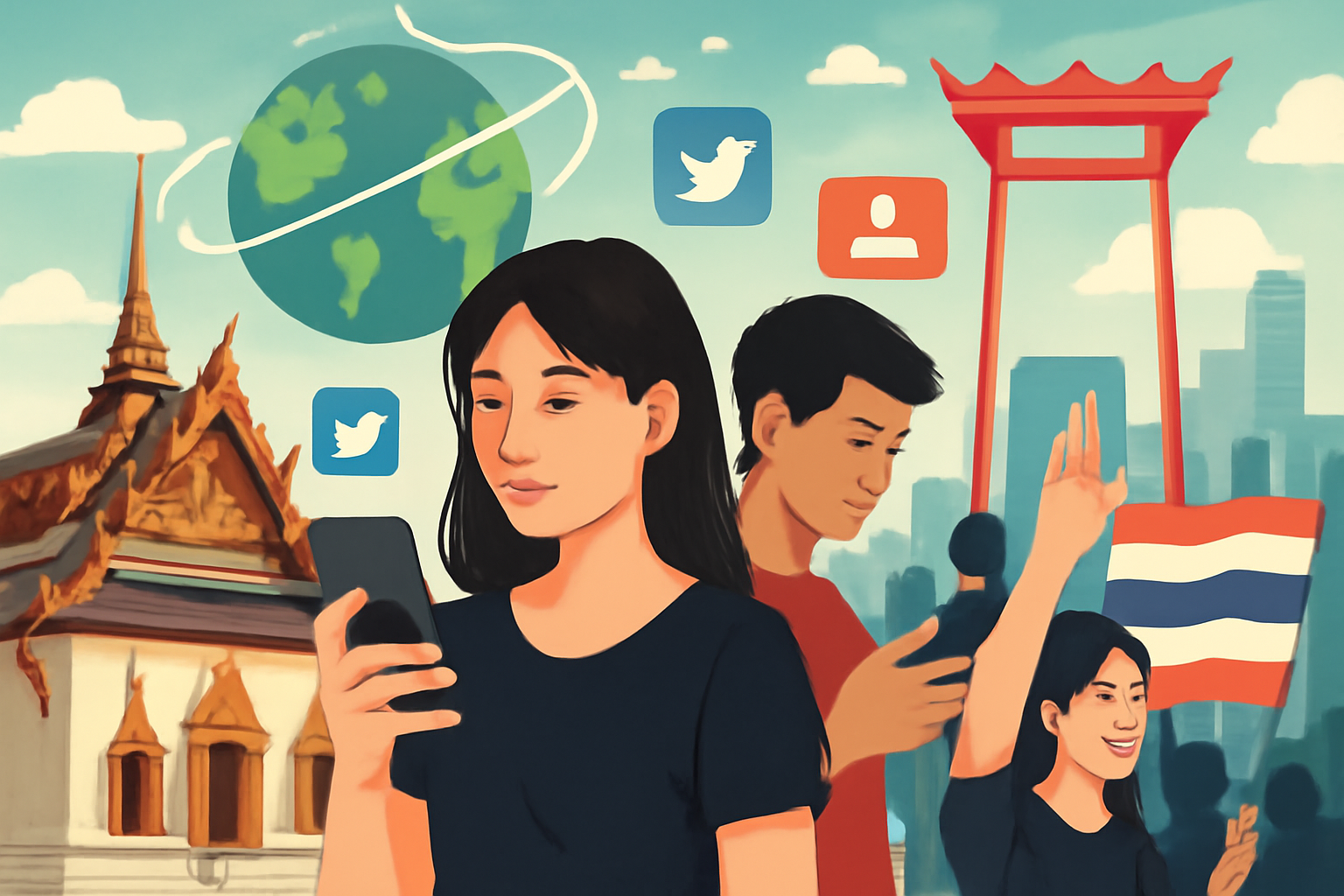
In recent decades, Thailand has witnessed significant social transformation, driven largely by the forces of globalization and the rise of social media. These factors have reshaped various aspects of Thai society, from cultural norms and economic structures to political dynamics and social interactions. As Thailand becomes increasingly connected to the global community, its local culture and traditions are both challenged and enriched by external influences. The pervasive use of social media further accelerates these changes, impacting how individuals communicate, form identities, and engage with the world.
One of the most notable effects of globalization on Thailand has been the exposure to global consumer culture. International brands, movies, music, and fashion have permeated Thai society, leading to the adoption of new lifestyles, consumption patterns, and even values. While this has enhanced the country’s economic growth, particularly in the urban areas, it has also raised concerns about the erosion of traditional Thai culture. Many Thai people feel a sense of cultural dilution as global trends increasingly overshadow local customs.
Social media, on the other hand, has become a powerful tool in shaping Thailand’s social landscape. Platforms like Facebook, Instagram, Twitter, and YouTube have created spaces where people can share ideas, express opinions, and engage in discourse, often transcending geographic and social barriers. This has contributed to the democratization of information and the decentralization of influence. In the past, information was typically filtered through traditional media channels, which were often state-controlled or influenced by a small group of elites. Today, anyone with access to the internet can share news, organize movements, and voice their concerns, leading to a more participatory society.
However, the rapid spread of information via social media has its downsides. Misinformation and fake news can spread just as quickly as legitimate news, leading to confusion and social unrest. Thailand has experienced instances where online campaigns or false information have incited political tension or conflict. The rise of online activism, while empowering, has also led to divisions within society, particularly in the context of political movements and protests. These online platforms often amplify the voices of opposition groups, contributing to a polarized political climate.
The younger generation in Thailand has been at the forefront of this transformation. Growing up in a world where global and local cultures are constantly interacting through digital media, they have developed a more cosmopolitan worldview. Young Thais are more likely to embrace diverse ideas and lifestyles, often challenging traditional views on family, gender roles, and social hierarchies. Social media has given them a voice, allowing them to push for greater political freedom, equality, and social justice.
Despite the challenges brought about by globalization and social media, the Thai government has also recognized the potential benefits. The rise of e-commerce, for instance, has opened up new economic opportunities for businesses, particularly small and medium enterprises (SMEs), to reach global markets. Additionally, social media campaigns have been used to raise awareness about important issues such as environmental conservation, health, and education.
In conclusion, globalization and social media have undeniably had a profound impact on social change in Thailand. While they have led to increased opportunities for economic development, cultural exchange, and political engagement, they have also introduced new challenges, such as cultural homogenization and political polarization. The ongoing evolution of Thai society, shaped by these forces, reflects the complex interplay between tradition and modernity, local and global, which will continue to define Thailand’s future trajectory.