




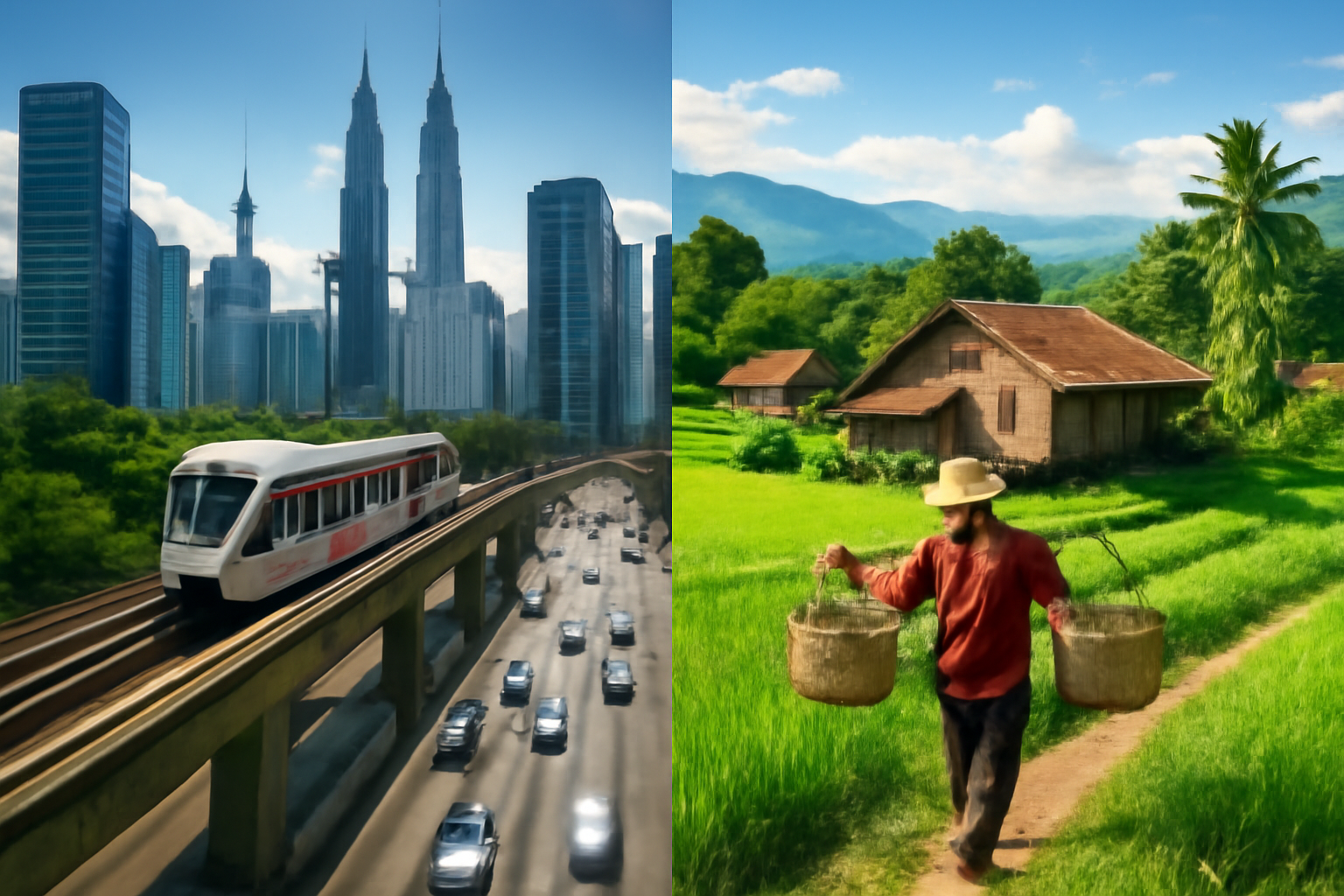
In Malaysia, the contrast between urban and rural lifestyles is striking, with each offering distinct experiences, challenges, and opportunities. The rapid urbanization over the past few decades has shaped the dynamics of both city and village life, with each catering to different needs and preferences.
Differences in Lifestyle
City life in Malaysia is often marked by modern conveniences and a fast-paced environment. Kuala Lumpur, Penang, and Johor Bahru are prime examples of bustling metropolises where infrastructure, technology, and services are well developed. Urbanites enjoy access to state-of-the-art healthcare facilities, excellent education institutions, a wide variety of employment opportunities, and vibrant social scenes. Public transport systems like the Light Rail Transit (LRT) and Monorail make commuting easier in these cities, and shopping malls, entertainment centers, and restaurants are easily accessible.
On the other hand, rural areas in Malaysia, such as in states like Perak, Kelantan, and Pahang, offer a quieter, slower-paced lifestyle. These areas are often characterized by a close-knit community, lush greenery, and agricultural activities. The focus of daily life in rural settings tends to revolve around farming, fishing, and other nature-based occupations. The pace of life is less stressful, and people generally have strong familial bonds and community ties. The landscape in these areas is vastly different from the urban jungle, providing a peaceful environment for those who appreciate nature.
Challenges of Urban and Rural Living
While city living offers numerous amenities, it also comes with significant challenges. The high cost of living is one of the major hurdles for urban residents. Housing prices in metropolitan areas are on the rise, making it difficult for young families or first-time homebuyers to afford property. Additionally, the increasing congestion, both in terms of traffic and population, results in longer commute times and a generally crowded atmosphere. Pollution is another urban concern, with cities experiencing air and noise pollution due to high traffic volume and industrial activities.
In contrast, rural areas face their own set of challenges. While the cost of living is significantly lower, rural residents often face limited access to essential services. Healthcare and educational facilities may not be as well-developed or easily accessible as in urban centers. Job opportunities are more limited, especially in industries that require specialized skills, leaving rural dwellers with fewer options for employment or career advancement. Additionally, infrastructure such as roads, internet access, and electricity may not be as reliable in some rural areas, affecting the quality of life.
Opportunities in Both Settings
Despite the challenges, both urban and rural areas in Malaysia offer unique opportunities for growth and prosperity. Urban areas, with their bustling job markets, are ideal for those seeking a career in sectors like technology, finance, media, and healthcare. The diversity of industries in the cities also fosters innovation and entrepreneurial spirit, with numerous startup hubs and business incubators providing support for aspiring entrepreneurs.
For those in rural areas, the opportunities lie in the agricultural and eco-tourism sectors. Malaysia’s rich biodiversity and natural resources provide avenues for sustainable farming, organic food production, and nature-based tourism. The government has been increasingly supportive of rural development initiatives, with programs aimed at enhancing rural infrastructure, improving access to education and healthcare, and encouraging rural entrepreneurship. Additionally, the rise of digital platforms allows individuals in rural areas to participate in online businesses, offering them a new avenue for income.
Final Thoughts
The choice between city and rural life in Malaysia depends on personal preferences, lifestyle goals, and career aspirations. Cities provide convenience, a dynamic job market, and an exciting lifestyle, but they come with challenges like high living costs and overcrowding. Rural areas, while peaceful and less expensive, require adapting to limited infrastructure and fewer opportunities. Understanding these differences allows individuals to make informed decisions about where to live, balancing both the advantages and limitations of each lifestyle.