





Singapore’s small footprint and resource constraints have turned the island-state into a living lab for green innovation. Rather than treating sustainability as an add‑on, planners integrate environmental thinking into water, energy, mobility, waste, and biodiversity policies. The result is a network of systems that reinforce each other, lowering emissions and raising quality of life.
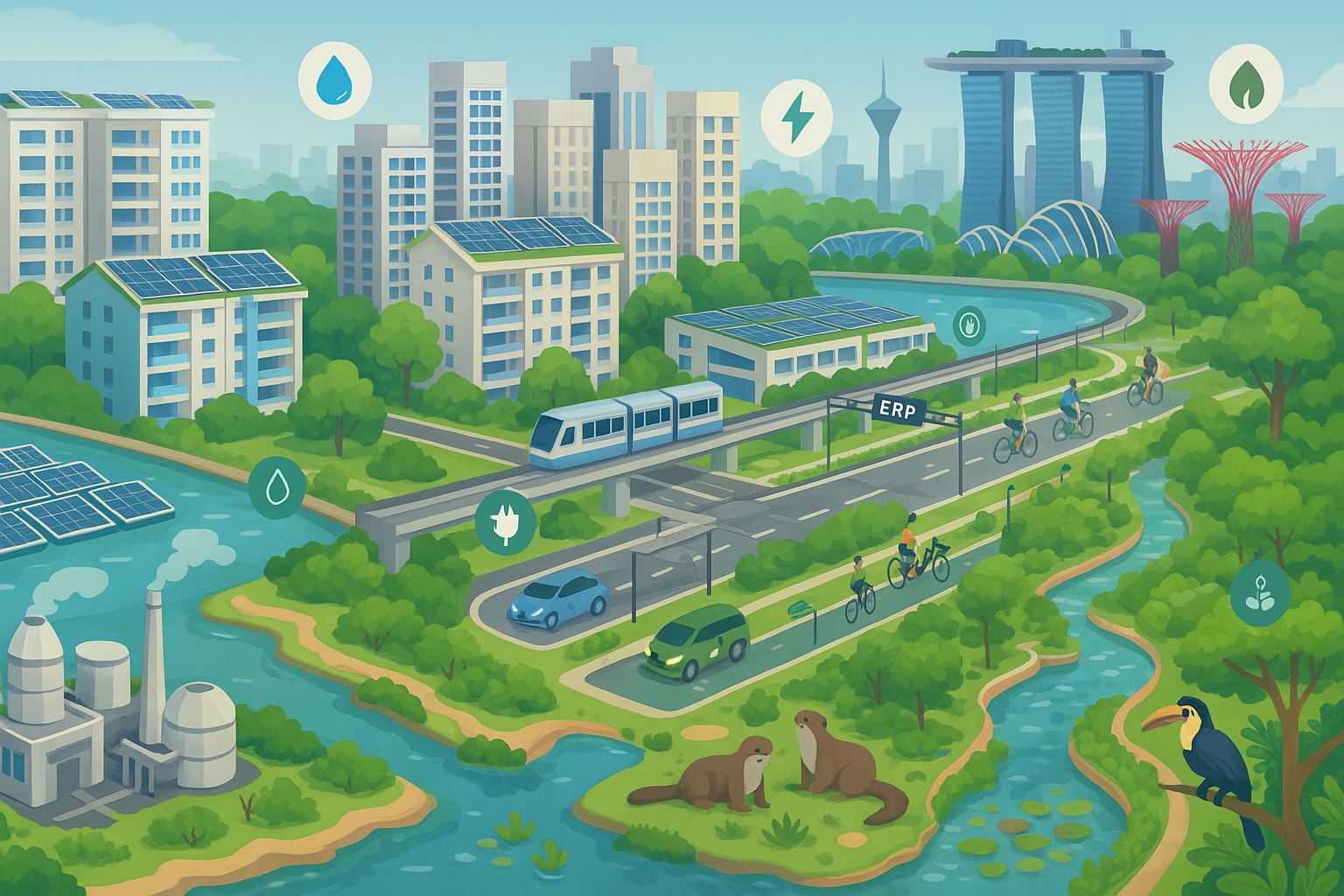
Start with water. Singapore’s “Four National Taps” strategy weaves local catchment, imported water, desalination, and high‑grade recycled water known as NEWater into a resilient portfolio. NEWater—purified using microfiltration, reverse osmosis, and ultraviolet disinfection—feeds industry and top‑up reservoirs, freeing potable supplies. Desalination fills gaps during dry spells, while the ABC Waters Programme softens hard infrastructure by turning canals into landscaped basins that slow runoff, improve filtration, and create community spaces.
Energy is being rebalanced. High‑rise density limits wind and hydro, so the country prioritizes efficiency and solar. Rooftop photovoltaics spread across public housing blocks, schools, and industrial estates; floating solar arrays on reservoirs squeeze more output from limited land. District cooling systems in Marina Bay chill water centrally and pipe it to buildings, cutting electricity use compared to decentralized chillers. Green Mark standards by the Building and Construction Authority push developers toward envelope shading, efficient HVAC, and smart controls.
Mobility policy aims to make private car ownership unnecessary. A comprehensive metro and bus network sits alongside congestion pricing via Electronic Road Pricing gantries. Licensing caps total vehicle numbers, and streets are designed to knit with Park Connector Networks for cycling and walking. Electric vehicle incentives and ubiquitous charging plans target tailpipe emissions without compromising transport reliability.
Waste sits at the heart of a circular strategy. The Zero Waste Masterplan targets food, packaging, and e‑waste with extended producer responsibility, deposit‑return pilots, and material recovery. Semakau—an offshore engineered landfill built from reclaimed land—buys time, but the real pivot lies in integrated plants such as Tuas Nexus, where an advanced waste‑to‑energy facility co‑locates with a water reclamation plant. There, anaerobic digestion and energy recovery turn sludge and refuse into electricity and useful by‑products.
Nature is not sidelined. The “City in Nature” vision expands green cover through streetside plantings, skyrise greenery, and ecological corridors that link parks to reserves like Sungei Buloh Wetland Reserve and Bukit Timah. Otters and hornbills have re‑established themselves, visible symbols of urban biodiversity. NParks’ tree‑planting campaigns and coastal resilience projects—including mangrove restoration and sea wall redesign—seek to buffer against sea‑level rise.
Policy alignment accelerates progress. A gradually rising carbon tax prices emissions while allowing industry to plan investments. The Singapore Green Plan 2030 bundles targets across energy, green economy, and sustainable living, while green finance—sustainability‑linked bonds, taxonomies, and disclosure rules—channels capital to credible projects. Crucially, pilots scale to platforms; technologies are trialed in sandboxes before wider adoption.
For other cities, Singapore shows that constraints can be creative catalysts. The lesson is not to copy‑paste specific projects, but to design portfolios that match local geographies, harness data, and iterate quickly. Systems thinking—done with rigor—turns vulnerability into advantage.