



Religious pluralism in the Philippines is often described through numbers—predominantly Roman Catholic, significant Muslim communities, vibrant Protestant and independent churches, and smaller Buddhist, Hindu, Sikh, Jewish, and Bahá’í groups. Yet the statistics tell only part of the story. What makes the Philippine landscape distinctive is how faith traditions have layered over centuries: precolonial animist practices; the arrival of Islam in Mindanao by the fourteenth century; Spanish-era Catholicism weaving parish life into town governance; and twentieth‑century waves of Protestant missions and indigenous Christian movements like Iglesia ni Cristo and the Aglipayan Church.
This layered history informs daily life. In Manila’s Quiapo, devotees of the Black Nazarene crowd narrow streets for Friday novenas, while just a few kilometers away, Buddhist temples in Binondo prepare incense and vegetarian offerings. In Cotabato or Marawi, the rhythm is set by the adhan and Friday congregational prayers, with halal markets supplying households and eateries. In Cebu, the Santo Niño devotion threads through family altars and fiesta culture, while in Davao, Kadayawan highlights indigenous gratitude rituals alongside contemporary performances.
The legal framework helps sustain coexistence. The 1987 Constitution guarantees freedom of religion and the separation of church and state. Muslim personal status, including marriage and inheritance, is respected through Shari’ah courts, while the Bangsamoro Autonomous Region in Muslim Mindanao exercises self-governance within the national system. Public schools recognize the need for diverse religious education, and programs integrating Arabic Language and Islamic Values Education into the curriculum support Muslim learners.
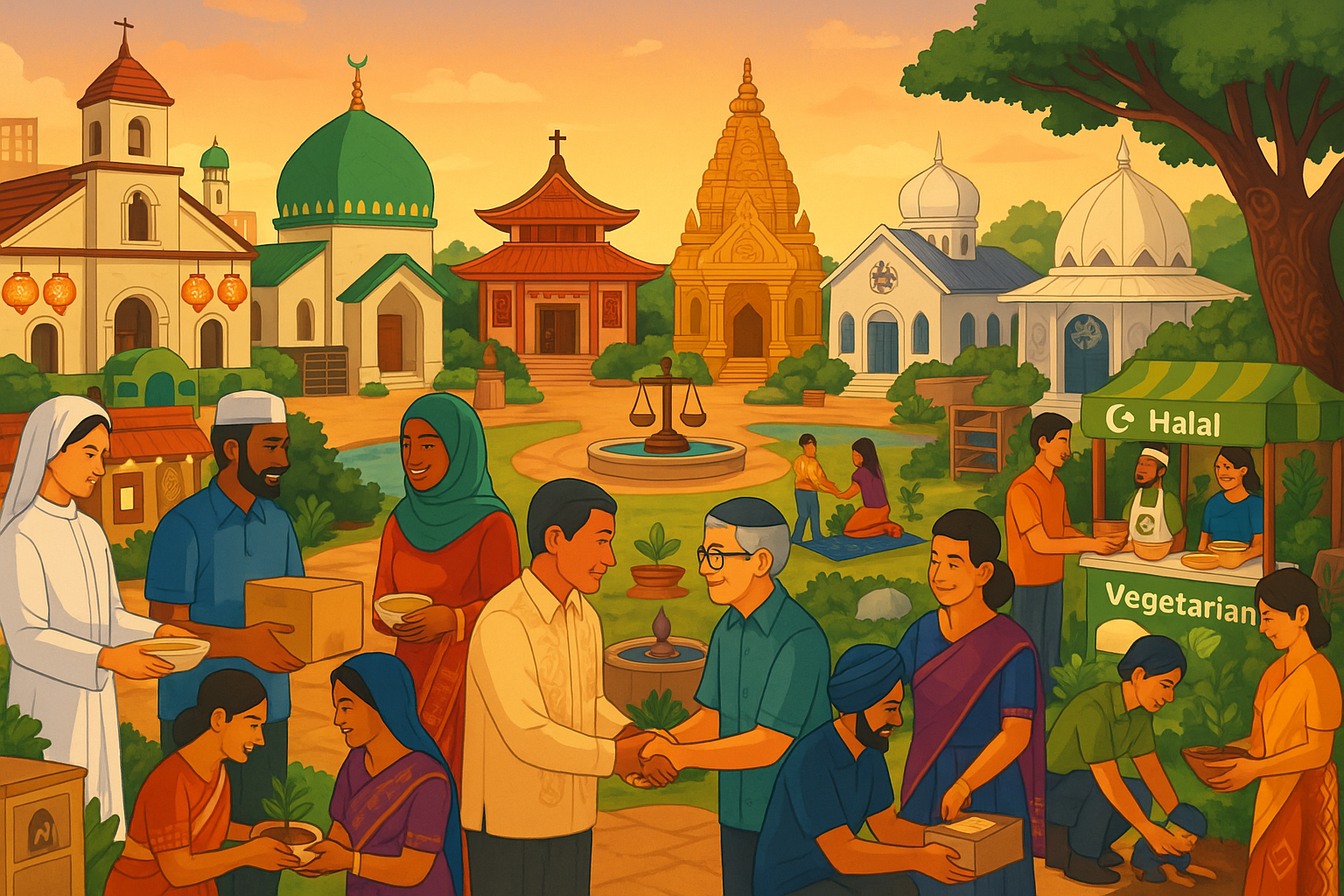
Interfaith cooperation is not merely ceremonial. The Bishops‑Ulama Conference in Mindanao brings Catholic, Protestant, and Muslim leaders together for dialogue and community projects. After typhoons or earthquakes, religious organizations coordinate relief: Catholic Caritas networks, Islamic charities, Protestant groups, and the Buddhist Tzu Chi Foundation often share warehouses, volunteers, and beneficiary lists. These partnerships build trust in ways that policy alone cannot.
Tolerance is tested in moments of crisis and by everyday frictions. Misunderstandings over dress codes, dietary needs, or religious holidays can create tension. Stereotypes about Moros or indigenous groups persist in media and casual speech. Laws such as the century‑old statute on “offending religious feelings” have sparked debate about free expression. Yet civic habits—neighborhood mediation, city ordinances recognizing Eid celebrations, and university‑based peace education—tend to nudge communities toward accommodation rather than confrontation.
The social fabric remains unmistakably syncretic. Folk Catholicism blends with indigenous healing; evangelical worship borrows local melodies; Muslim communities adapt business hours during Ramadan; and mixed‑faith families negotiate rituals with care and creativity. Religious leaders often frame public ethics—on poverty, corruption, or disaster resilience—in moral language that resonates across traditions. In this archipelago, tolerance is less a slogan than a practice sustained by festivals, food, family ties, and the quiet work of institutions that protect conscience.