





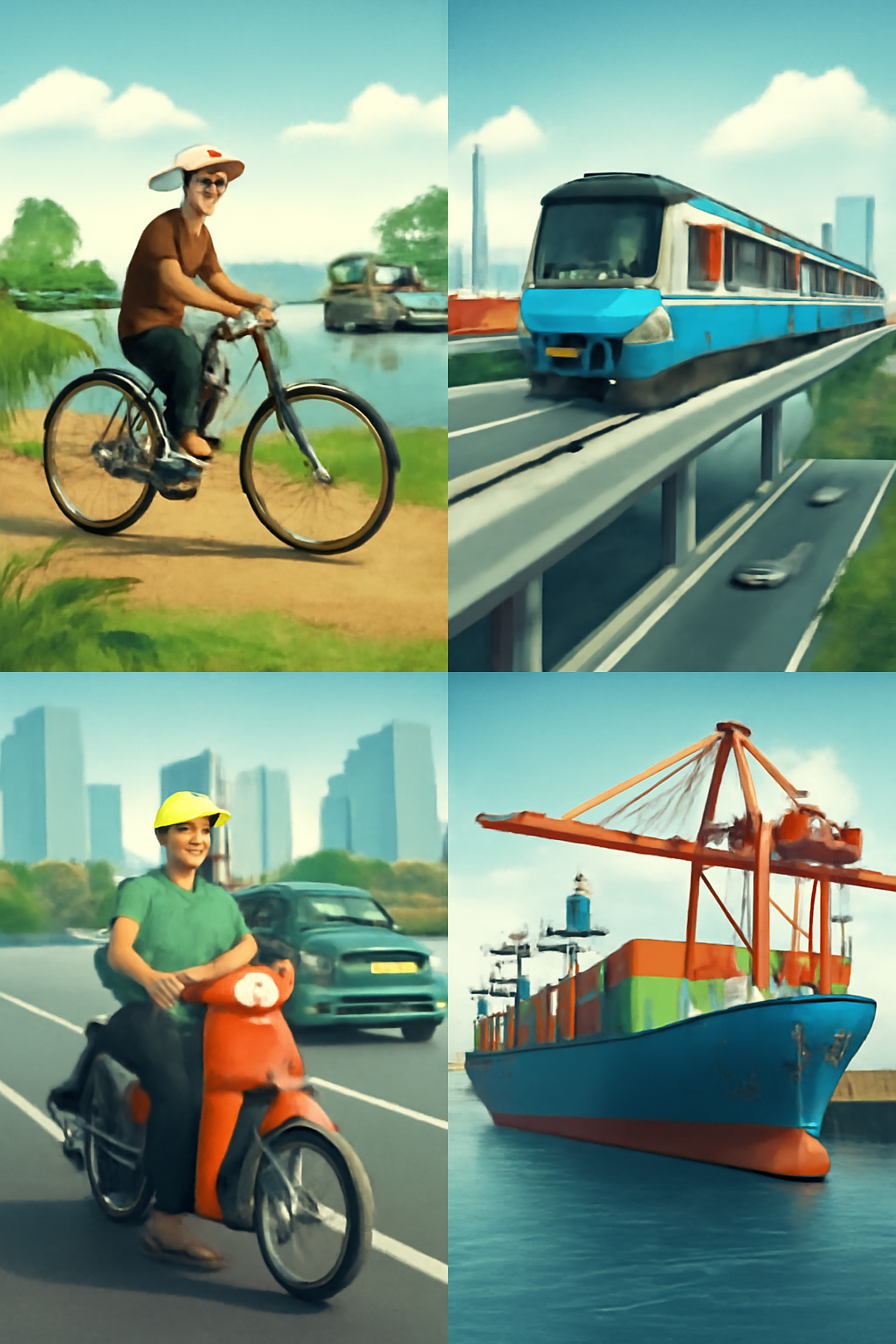
Vietnam’s transportation sector has experienced remarkable transformations over the past few decades. From its historical reliance on bicycles and small boats, the country has evolved into a modern network that includes bustling highways, railways, and ports, all of which have helped shape the country’s development and urbanization.
Historically, Vietnam’s transport infrastructure was limited, primarily consisting of rural roads and waterways, with boats being the dominant means of transport along the Mekong Delta and other river systems. The country’s road network was not sufficiently developed to accommodate the growing demand for travel and trade.
However, after the reunification of Vietnam in 1975, the government made a conscious effort to rebuild and modernize the country’s infrastructure. By the 1990s, as the economy started to grow due to the Doi Moi reforms, transportation became central to this growth. Urbanization accelerated, and with it, the demand for efficient and modern transportation systems surged. Cities like Hanoi and Ho Chi Minh City saw a dramatic increase in motorbike usage, which soon became the symbol of Vietnam’s dynamic urban life.
In the last two decades, Vietnam has invested heavily in modernizing its transportation infrastructure. New highways connecting major cities have been built, and the government has invested in rail systems, such as the Hanoi Metro and Ho Chi Minh City’s ongoing metro development. Additionally, major ports, such as Cai Mep, have been expanded to accommodate increasing international trade.
Urban mobility has also been transformed with the rise of ride-hailing services like Grab, which has revolutionized the way people move around cities. These services complement the existing public transport systems, including buses, which have been updated to improve their reach and efficiency.
Vietnam’s efforts to improve transportation are critical for its continued economic growth and regional connectivity. As the country continues to urbanize, these infrastructure improvements will be key in fostering sustainable development, reducing traffic congestion, and ensuring that transportation can keep pace with the population growth.