






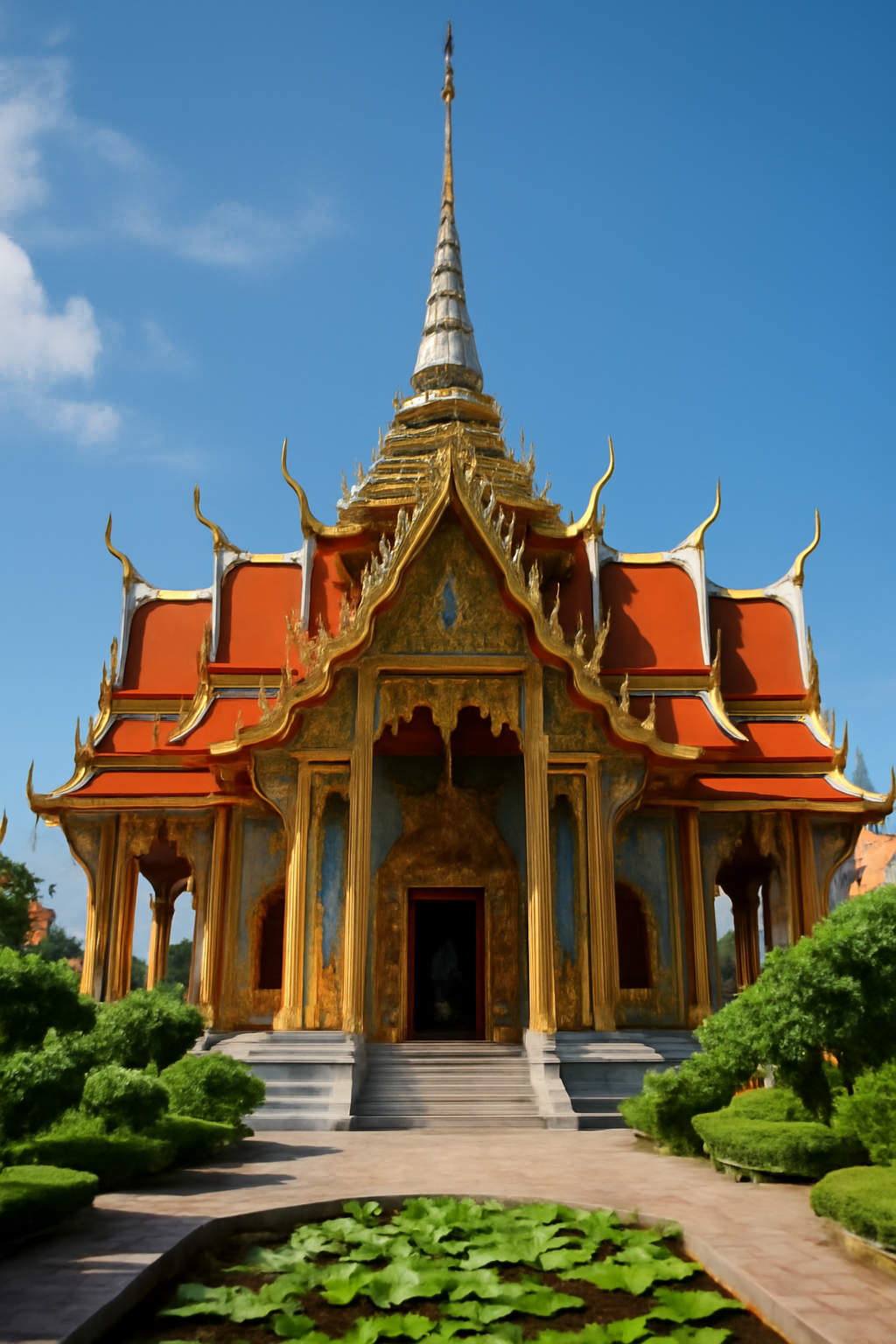
Thai temples, also known as wat, are revered not only as places of worship but also as architectural masterpieces that embody the rich cultural and spiritual heritage of Thailand. The beauty of these structures transcends mere physical appearance; they are designed with a deep connection to the Buddhist faith, reflecting both divine significance and aesthetic brilliance.
One of the most distinctive features of Thai temple architecture is the prang or central spire. This soaring structure represents Mount Meru, the sacred center of the universe in Buddhist cosmology. Prangs often have intricate carvings, colorful mosaics, and golden accents that catch the sunlight, symbolizing the divine realm. These elements are carefully crafted to create a visual narrative that guides worshippers toward spiritual enlightenment.
Another hallmark of Thai temple architecture is the vihara, the main hall where rituals and prayers take place. The vihara is often a large, open space designed to accommodate large groups of people. The interiors are adorned with images of the Buddha, detailed murals depicting scenes from his life, and sometimes, intricate wood carvings that convey Buddhist teachings. The murals are often painted in rich, vibrant colors, and they serve as visual representations of Buddhist stories, providing worshippers with a form of spiritual meditation.
The roofs of Thai temples are equally as stunning as the rest of the structure. Typically made with multiple tiers, the roof design has a sweeping curve, symbolizing the lotus flower, a sacred symbol in Buddhism. This curved design not only enhances the temple’s beauty but also serves a practical function by helping to channel rainwater away from the temple’s foundation.
The use of gold is another prominent feature of Thai temples. Gold leaf, in particular, is often applied to statues, murals, and architectural elements as a symbol of purity and reverence. Gold symbolizes the light of enlightenment and the path to Nirvana, the ultimate goal in Buddhism. It is also a representation of the wealth and power of the Thai kings, who historically patronized the construction of these magnificent structures.
The layout of the temple grounds also reflects Buddhist principles. The temple is often surrounded by a courtyard, which serves as a space for reflection, meditation, and community gatherings. The garden is carefully landscaped with serene ponds, flowering plants, and trees, creating an atmosphere conducive to spiritual practice. The architecture, combined with the surrounding natural beauty, creates an immersive experience that is both visually stunning and spiritually enriching.
Walking through a Thai temple is like stepping into a living example of Buddhist philosophy. Every element, from the towering spires to the intricate artwork, is a visual expression of the teachings and ideals of Buddhism. Whether it is a grand royal temple or a humble village shrine, the architecture of Thai temples is designed to inspire reverence, promote meditation, and create a space for spiritual growth. It is a testament to the harmony between art, faith, and nature, and it continues to captivate visitors from around the world.