



The Philippines has experienced significant economic growth in recent decades, and its natural resources play a pivotal role in this development. As an archipelago with rich biodiversity and abundant mineral resources, the country has substantial potential to continue its upward economic trajectory. To understand the economic development of the Philippines, it’s important to examine both its natural resources and how they contribute to the broader economy.
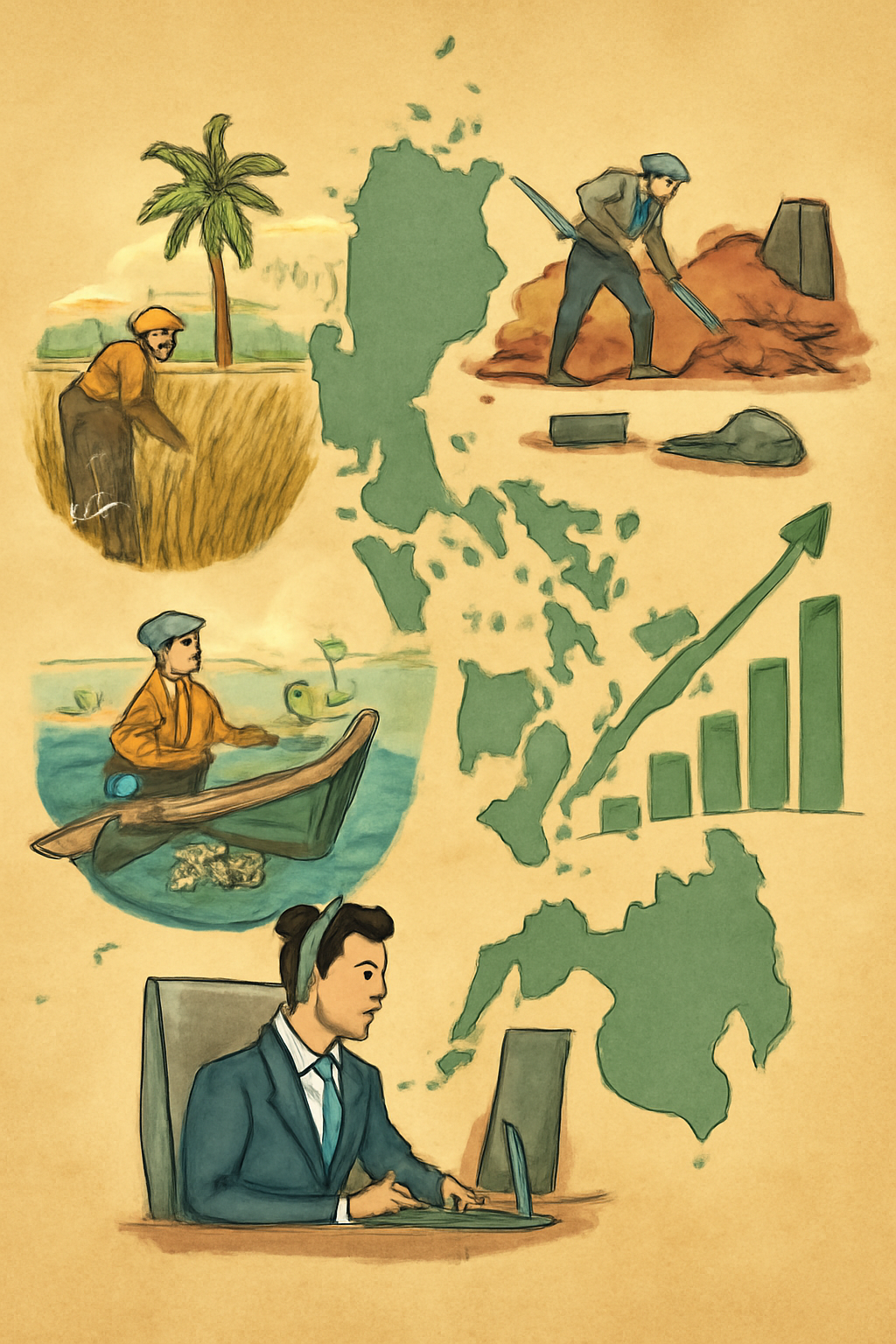
One of the primary assets the Philippines possesses is its vast array of mineral resources. The country is known to have extensive deposits of gold, copper, nickel, and chromite. The mining sector in the Philippines contributes significantly to the economy, not only by providing raw materials for global markets but also through the creation of jobs and the generation of government revenues. However, the mining industry faces challenges, such as environmental concerns and the need for sustainable practices. For instance, the extraction of nickel and other minerals often leads to deforestation, which can have lasting environmental impacts.
In addition to minerals, the Philippines is endowed with rich agricultural resources, making it one of the largest producers of products like coconut, sugar, and rice. The agricultural sector has traditionally been a cornerstone of the Filipino economy, employing a significant portion of the population. The country’s fertile soil and tropical climate support the cultivation of a wide range of crops. However, the agriculture sector is vulnerable to climate change and the increasing frequency of natural disasters, which pose a threat to crop yields and food security.
The Philippines also benefits from its maritime resources. The country is surrounded by some of the world’s richest fishing grounds, and its fisheries contribute both to domestic food supply and to export markets. Fish and seafood are vital components of the Filipino diet and an important source of livelihood for coastal communities. However, overfishing and the destruction of marine ecosystems have threatened this sector, making sustainable fishing practices a crucial concern.
The combination of these natural resources has allowed the Philippines to develop a diversified economy. The country has emerged as a leading provider of various agricultural products, minerals, and even business services. Services, particularly in the business process outsourcing (BPO) sector, have grown exponentially in recent years. The Philippines has become a hub for outsourcing due to its highly educated and English-speaking workforce, making it an attractive destination for global companies looking to outsource customer service, IT, and other services.
In terms of overall economic growth, the Philippines has consistently shown resilience, even in the face of challenges such as the COVID-19 pandemic. The country’s GDP has steadily increased, driven in part by its natural resource base and the growth of sectors like manufacturing, services, and construction. However, income inequality and poverty remain persistent issues, and efforts to ensure that economic gains are equitably distributed continue to be a focal point of government policy.
The government has recognized the importance of sustainable development in harnessing the potential of natural resources. In recent years, there has been a push toward more environmentally responsible practices, particularly in mining and agriculture. By balancing economic growth with environmental conservation, the Philippines aims to ensure long-term prosperity while preserving its natural heritage.