





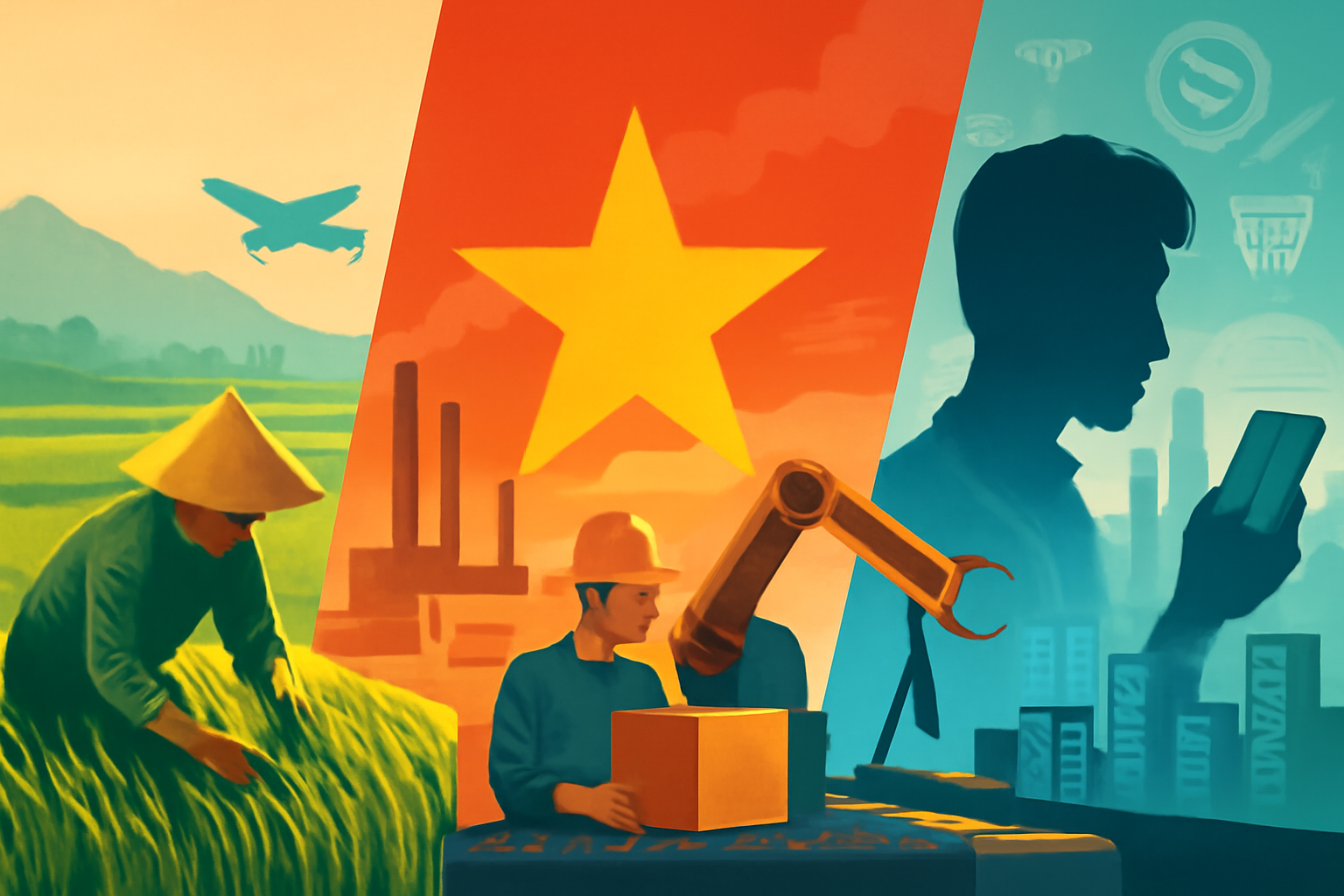
Vietnam, a country with a rich history and an agrarian economy, has witnessed a remarkable shift in its economic landscape over the past few decades. Once largely dependent on agriculture, the nation has transitioned to a dynamic industrial and technological hub, positioning itself as one of the fastest-growing economies in Southeast Asia. This transformation, driven by strategic government policies and global integration, highlights the resilience and adaptability of the Vietnamese economy.
Agricultural Foundation: A Steady Starting Point
Historically, Vietnam’s economy was predominantly agricultural, with rice, coffee, and rubber being the main exports. For many years, agriculture was not only the backbone of the economy but also a key employment source for the majority of the population. Despite this reliance, the Vietnamese government, especially after the economic reforms of the 1980s known as “Đổi Mới,” recognized that agriculture alone could not sustain long-term growth. This realization laid the foundation for the country’s future diversification.
The agricultural sector in Vietnam has undergone substantial modernization since then. For example, innovations in rice farming, such as the introduction of high-yielding varieties, have significantly boosted productivity. Furthermore, agricultural exports, particularly seafood and fruits, have found lucrative markets around the world, bolstering the nation’s trade balance.
Industrial Expansion: A Robust Shift Toward Manufacturing
Vietnam’s industrial growth has been driven by its strategic investment in manufacturing and heavy industries. Over the years, the country has successfully attracted foreign direct investment (FDI) from global giants, particularly in the electronics, textiles, and automotive sectors. The establishment of export processing zones and industrial parks has played a critical role in fostering this transformation.
The manufacturing sector, especially electronics, has surged with companies like Samsung and LG setting up large-scale operations. The electronics industry now plays a significant role in Vietnam’s export profile, with products like mobile phones, televisions, and computer accessories contributing heavily to GDP growth. This industrial shift has created millions of jobs and propelled the country toward becoming a key player in global supply chains.
Technology and Innovation: Leading the Digital Revolution
In recent years, Vietnam has emerged as an innovation hub, especially in the fields of technology and digital transformation. The government has invested heavily in creating a favorable environment for technology startups and digital businesses. Programs aimed at enhancing digital literacy, improving internet infrastructure, and supporting e-commerce platforms have made Vietnam one of the most digitally advanced nations in Southeast Asia.
Vietnam’s tech ecosystem has flourished with the rise of homegrown companies such as VNG Corporation, MoMo, and Tiki, which are leading the way in software development, mobile payment solutions, and e-commerce. The country is also seeing a boom in fintech, with digital wallets and online financial services gaining traction among the younger population.
The government’s push to digitize public services and promote e-government initiatives has further accelerated the integration of technology into daily life. For instance, Vietnam’s transition toward a cashless economy and the adoption of digital platforms for education, healthcare, and government services reflect its forward-thinking approach.
The Path Ahead: Challenges and Opportunities
While Vietnam has made significant strides in industrialization and technological advancement, several challenges remain. Infrastructure, though improving, still lags behind the needs of an expanding economy. Additionally, the country faces pressures related to environmental sustainability and the need for a skilled workforce to meet the demands of the tech-driven economy.
However, with its youthful, tech-savvy population and the government’s commitment to innovation, Vietnam is poised to continue its upward trajectory. The shift from an agriculture-based economy to a more diversified industrial and technology-driven one signals a bright future, positioning Vietnam as a key economic player in the 21st century.