






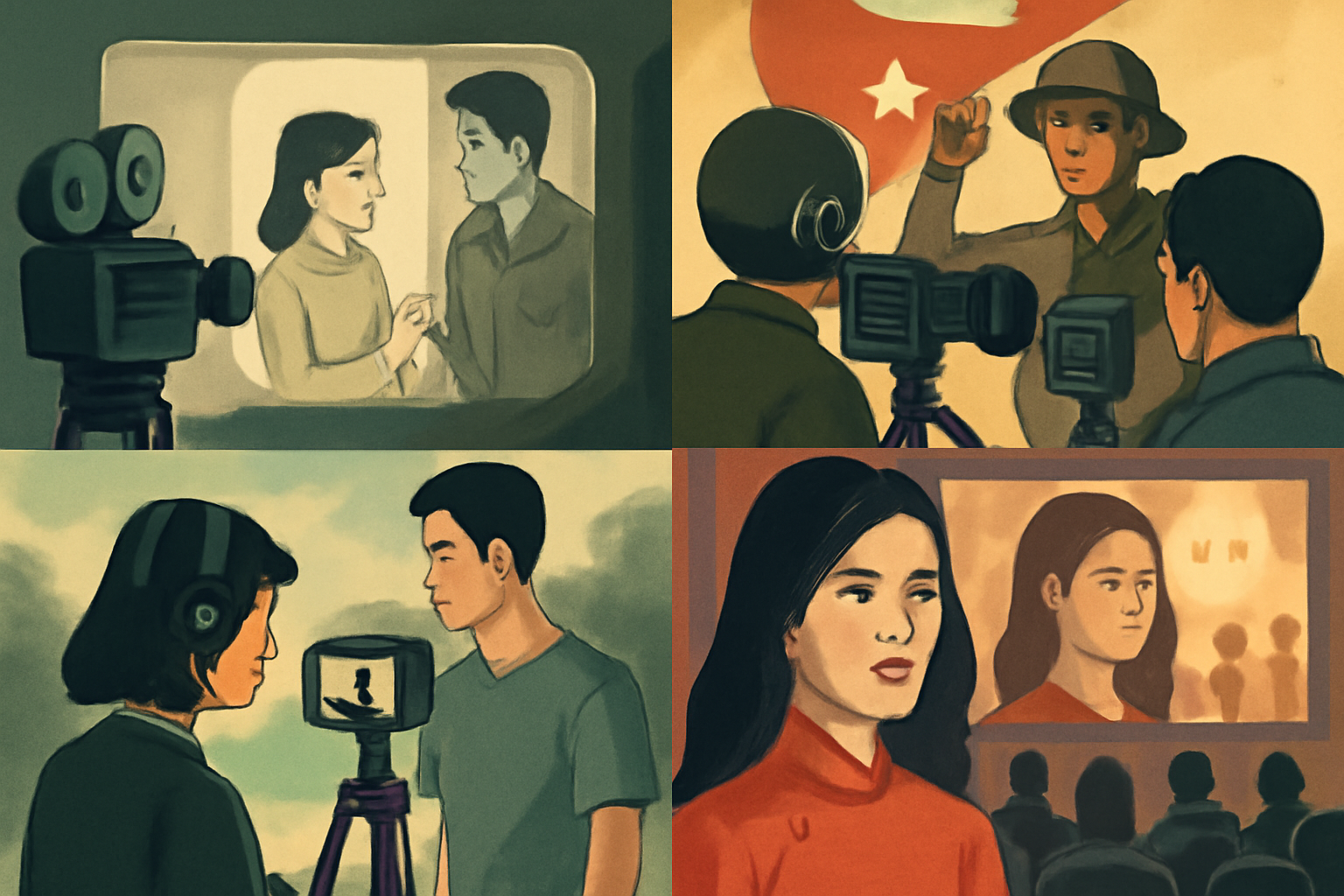
The Vietnamese film industry has undergone significant transformation, evolving from its humble beginnings during the French colonial period to becoming a thriving part of Southeast Asian cinema. The history of Vietnamese cinema is intertwined with the nation’s political and cultural changes, making it an essential part of the country’s history.
Early Beginnings and Colonial Influence
The birth of cinema in Vietnam can be traced back to the early 20th century. During the French colonial era, the first films were introduced by the French, but they were largely foreign productions. However, it was not long before Vietnamese filmmakers began to emerge. The first feature film in Vietnam, Chung Tuong (The Confession), was produced in 1923, marking the beginning of Vietnamese filmmaking. At this time, films were often focused on social issues, portraying the struggles of the Vietnamese people under colonial rule.
Post-Independence and the Rise of Vietnamese Cinema
After the Vietnam War and the reunification of the country in 1975, the film industry faced significant challenges. The government took control of film production and distribution, and many filmmakers had to navigate the constraints of a socialist regime. Films from this period were often state-sponsored, with a focus on nationalistic themes and socialist realism.
The 1990s, however, saw a significant shift as the government began to loosen its control over the industry. With the introduction of reforms, known as Đổi Mới, the film industry began to modernize, and filmmakers began experimenting with different genres and themes. This period marked the emergence of a new wave of filmmakers who sought to tell stories that resonated with the modern Vietnamese experience.
Modern Vietnamese Cinema: Challenges and Achievements
In recent years, the Vietnamese film industry has experienced a renaissance. Modern filmmakers have gained international recognition for their unique storytelling techniques, vibrant visuals, and exploration of social issues. The rise of digital filmmaking has made it easier for independent filmmakers to create films on smaller budgets, allowing for greater creativity and experimentation. Despite these advances, the industry faces challenges such as limited funding and a competitive market dominated by foreign films.
Nonetheless, Vietnamese cinema has gained global attention with films like The Third Wife (2018), which received accolades at international film festivals. The success of these films has helped elevate Vietnam’s film industry on the world stage, showing that Vietnam is a country with a rich cinematic tradition and a promising future in filmmaking.