





The Philippines boasts a rich and diverse literary heritage that has played a crucial role in shaping its national identity. At the heart of this cultural landscape is the Filipino language and its literary traditions, which have been influenced by various historical and social forces. From its pre-colonial roots to its modern expressions, Philippine literature has evolved in response to political upheaval, foreign influence, and the quest for national unity.
The Philippines has more than 170 languages, but Filipino and English are the official languages. Filipino, a standardized version of Tagalog, has become the unifying language, bridging the gaps between different regional dialects. Filipino literature is the literary product of this evolution, and it incorporates elements from the pre-colonial oral traditions, Spanish colonization, American influence, and post-colonial nationalism.
Pre-colonial literature in the Philippines was mostly oral, expressed through folk epics, myths, and poems. These works often centered around the lives of local heroes and were passed down from generation to generation through oral storytelling. Early examples of these works include the Biag ni Lam-ang of the Ilocanos and the Hinilawod of the Visayans. These epics served not only as entertainment but also as a vehicle for transmitting cultural values and historical knowledge.
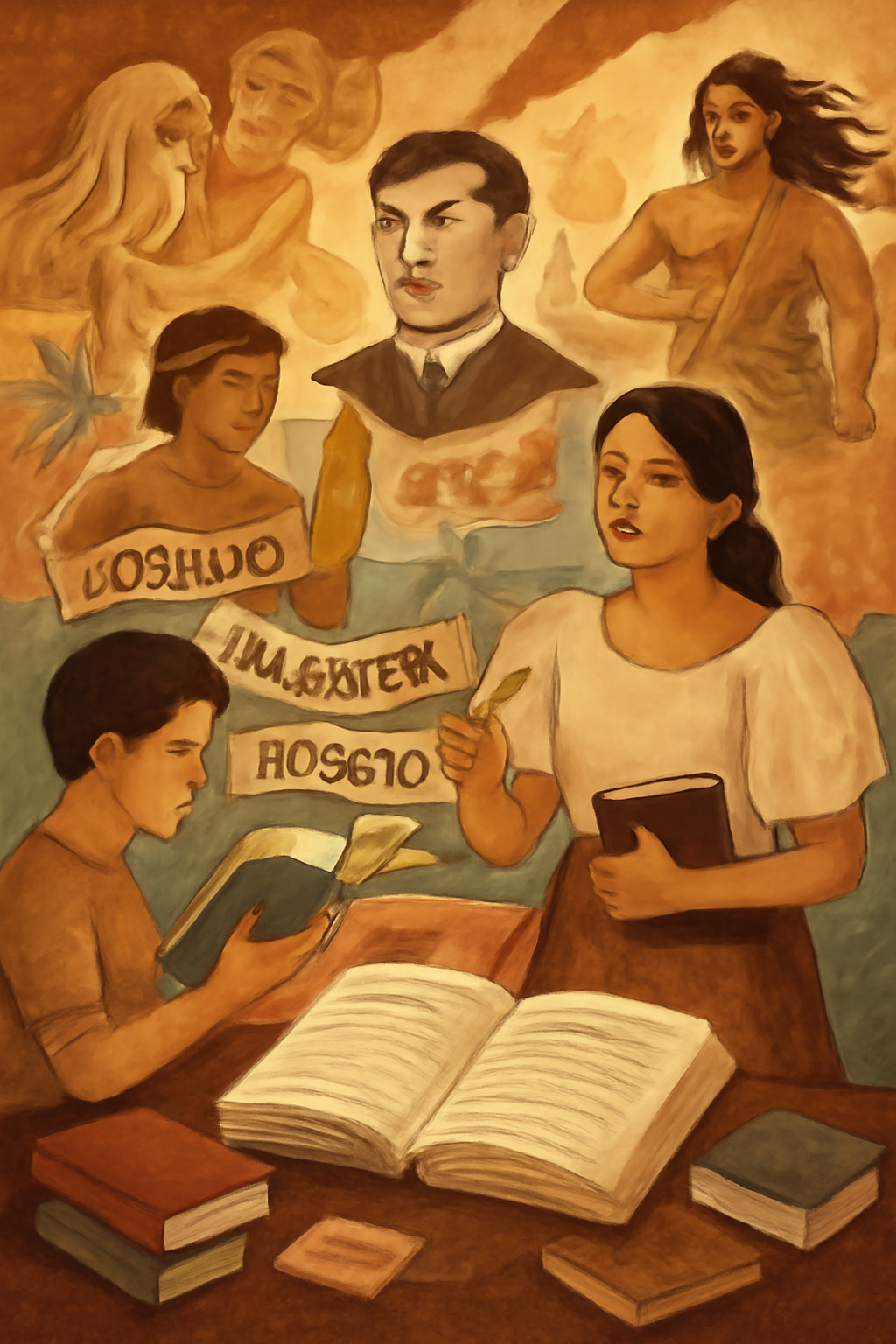
During the Spanish colonial period, the Philippines experienced significant linguistic and literary changes. The Spanish introduced the Roman alphabet, Catholicism, and formal education. These influences resulted in the emergence of religious and secular literature, often written in Spanish. Filipino authors like José Rizal, the national hero, began to write works such as Noli Me Tangere and El Filibusterismo, which critiqued Spanish colonial rule and inspired revolutionary movements. These works contributed to the rise of Filipino nationalism and laid the groundwork for modern Philippine literature.
Following American colonization, the Philippines became exposed to Western literary forms and education. English became widely used as a medium of instruction, and many Filipino writers began to write in English. This period saw the emergence of literary giants such as Nick Joaquin, F. Sionil José, and Carlos Bulosan, whose works explored Filipino identity, social issues, and the tensions between tradition and modernization.
The post-colonial period has seen the flourishing of Philippine literature in both Filipino and English. Authors now write about a wide range of topics, from family dynamics and social justice to the impact of globalization. Philippine literature continues to evolve, reflecting the nation’s changing social, political, and cultural landscape. It also serves as a mirror for Filipinos to better understand themselves and their place in the world.
In conclusion, the language and literature of the Philippines are central to its national identity. They have not only preserved cultural heritage but have also provided a platform for social commentary, activism, and the expression of Filipino experiences. By examining the evolution of Philippine literature, one can gain deeper insight into the complex forces that have shaped the country’s identity and continue to influence its future.