




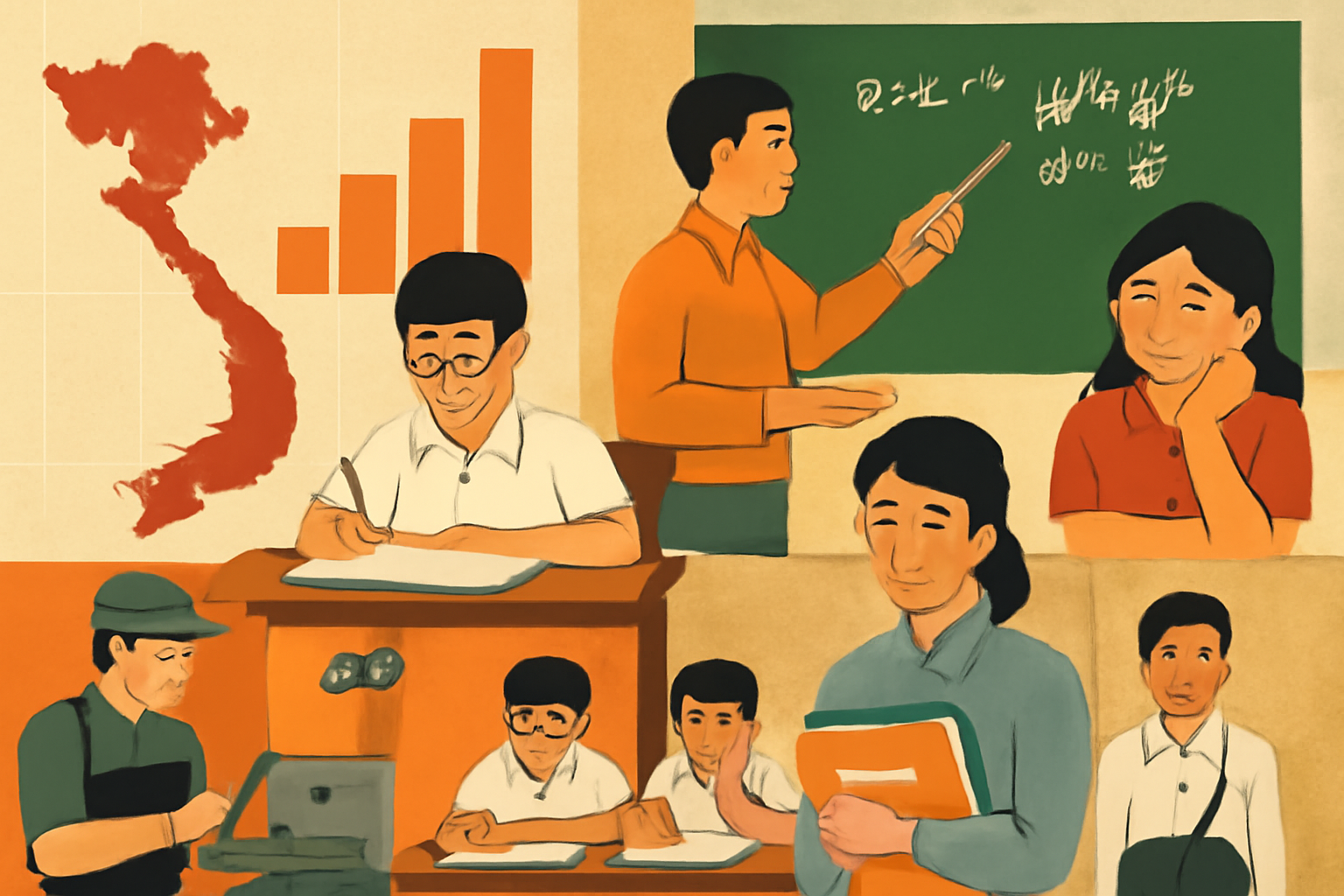
Vietnam has made remarkable strides in its education system over the past few decades. With a history marked by war and economic challenges, the country has managed to transform its educational landscape into one of the most promising in Southeast Asia. This transformation is reflected in the quality of education, high literacy rates, and the nation’s increasingly competitive global position in various academic assessments.
Achievements
Vietnam’s educational system is grounded in its commitment to universal education. One of the country’s most significant achievements is its literacy rate, which stands at 94% for adults. The Vietnamese government has prioritized education, especially at the primary and secondary levels. Education is free and compulsory for children aged 6 to 14, and this policy has had a profound impact on access to schooling.
The country has also performed impressively in international assessments, particularly in the Programme for International Student Assessment (PISA) tests. In the 2018 PISA results, Vietnam ranked higher than many developed nations, particularly in mathematics, science, and reading comprehension. This is particularly remarkable given the country’s lower levels of public spending on education compared to other high-performing nations.
Another notable achievement is Vietnam’s focus on vocational education and training. The government has invested in providing students with practical skills that are relevant to the labor market, helping to reduce youth unemployment and support economic growth. Vocational training institutions are designed to meet industry needs, contributing to a well-prepared workforce.
Challenges
Despite the remarkable achievements, Vietnam’s education system faces several significant challenges. One of the primary concerns is the heavy reliance on rote learning. While students consistently excel in standardized tests, there is a growing recognition that the current system does not always foster critical thinking, creativity, or problem-solving skills. The emphasis on memorization rather than application of knowledge has sparked debates about the need for reform in teaching methods.
Another major issue is the disparity in educational quality between urban and rural areas. Although major cities like Hanoi and Ho Chi Minh City boast high-quality schools, students in rural areas often lack access to the same resources and qualified teachers. This regional inequality has resulted in differences in academic performance, with rural students facing greater barriers to success.
Additionally, there is a shortage of well-trained teachers. Despite significant investments in education, many teachers are not adequately equipped to handle the demands of the modern classroom. Professional development for teachers is often insufficient, and there is a need for better support systems to help educators improve their skills.
Conclusion
Vietnam’s education system has made substantial progress in recent years, leading to impressive academic outcomes and broad access to education. However, there are still important challenges that need to be addressed, particularly in terms of teaching methods, regional inequalities, and teacher training. As the country continues to invest in education, the hope is that these challenges will be overcome, allowing Vietnam to create an education system that is even more inclusive, innovative, and adaptable to the needs of a rapidly changing global economy.