








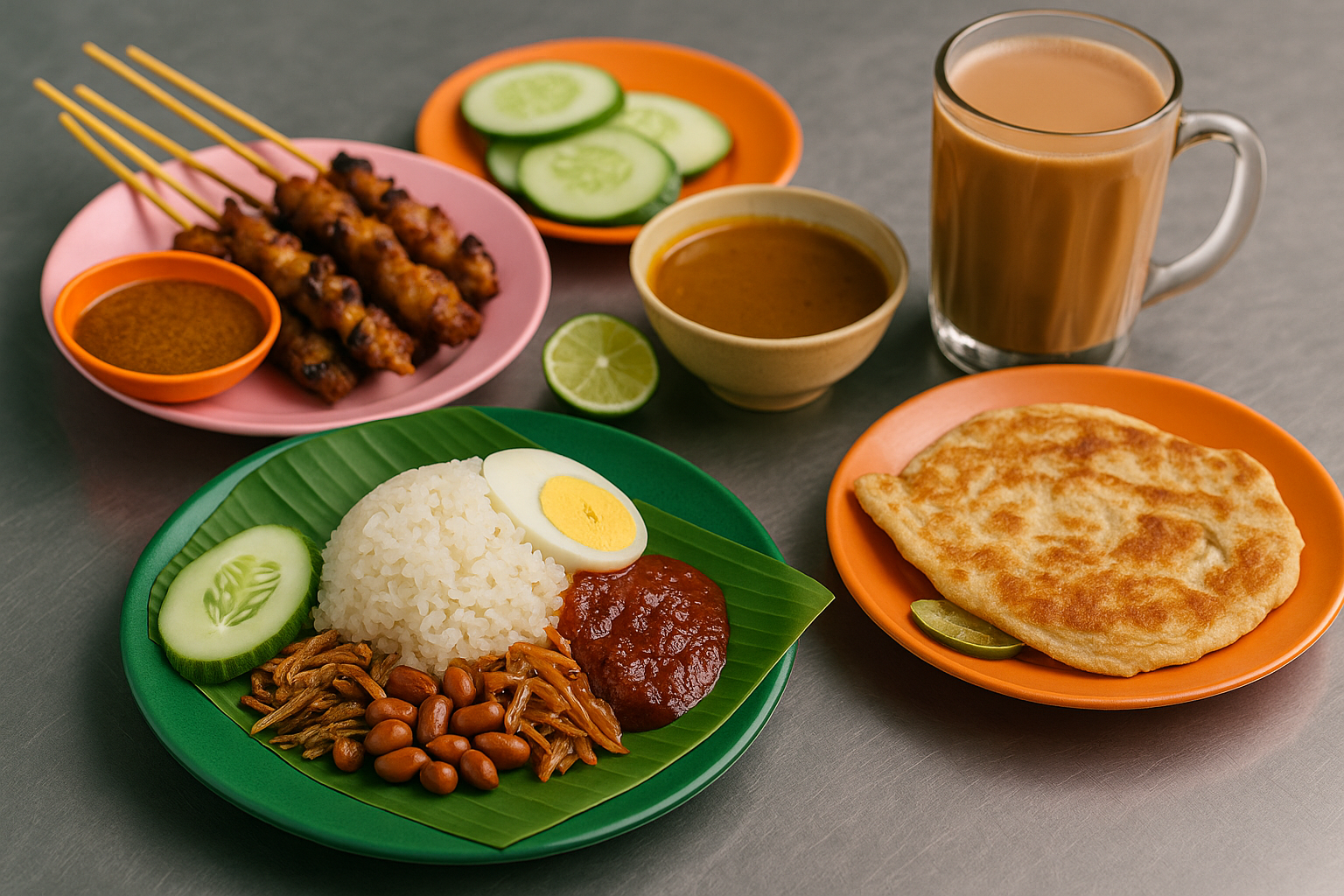
Malaysia’s food culture is a sumptuous mosaic woven from Malay, Chinese, Indian, Peranakan, and Indigenous traditions. This interplay of communities has produced a cuisine where coconut-rich gravies, smoky woks, and fermented condiments coexist harmoniously, each bite telling a story of migration, trade, and local terroir. At the center of this landscape are everyday staples and celebratory dishes that map flavor onto place and memory.
Start with nasi lemak, often called the country’s emblematic plate: coconut rice perfumed with pandan, anchovy sambal that ranges from mellow to volcanic, crisp peanuts, and cooling cucumber. Variations proliferate—ayam goreng berempah for crunch, or sotong sambal for oceanic depth—yet the essence remains that yin-yang of richness and heat. From the wok, char kway teow delivers slippery rice noodles in a breath of wok hei, tossed with chives, egg, and seafood; it’s Penang’s smoky signature.
Laksa reveals the nation’s diversity in a single label. Curry laksa swirls coconut milk with curry paste for a velvety, aromatic soup. In contrast, Penang asam laksa bristles with tamarind tang, torch ginger, and flaked mackerel, topped with mint and sliced pineapple. Travel east and Sarawak laksa brings a subtly spiced broth—lighter than curry, richer than asam—often crowned with prawns and shredded omelet.
Indian influences shine in roti canai, a flaky, griddled bread with ghee-brushed layers, torn into curry gravies or dhal. Banana leaf rice—steamed rice served on banana leaves with vegetables, pickles, papadum, and an array of curries—celebrates abundance and texture. Mamak stalls (Muslim Indian eateries) hum late into the night, slinging maggi goreng and teh tarik, the theatrically “pulled” tea whose foamy crown hints at its malty sweetness.
Malay rendang, slow-cooked in coconut and spice until the sauce clings to the meat, is tender, aromatic, and celebratory, a staple for Hari Raya alongside ketupat. Meanwhile, Nyonya (Peranakan) cooking fuses Chinese technique with Malay spice pantries—think ayam pongteh, chap chye, and jewel-toned kuih made with pandan, coconut, and gula Melaka. In the south, otak-otak—spiced fish mousse steamed or grilled in banana leaves—perfumes the air with lemongrass and chili.
Sabah and Sarawak introduce different notes: hinava (a Kadazan-Dusun citrus-cured fish salad), tuhau (ginger-lily stems), and kolok mee (springy noodles tossed with light sauce) add a Bornean cadence. Street desserts refresh the tropics: cendol’s pandan jelly, coconut milk, and palm sugar syrup; ais kacang’s mountain of shaved ice jeweled with beans, corn, and attap seeds.
At every turn, condiments matter. Sambal belacan—chilies pounded with toasted shrimp paste and lime—can transform a simple stir-fry. Pickled chilies brighten noodles; keropok (crackers) add crunch. Halal considerations shape menus, ensuring broad accessibility. Above all, Malaysian food is convivial and affordable, served at kopitiam coffee shops, vibrant markets, and polished restaurants alike.
Eating in Malaysia is an act of exploration. It’s a breakfast of kaya toast or nasi lemak, a lunch of mixed rice (nasi campur), and a midnight mamak run. The cuisine’s genius lies in how it balances contrast: creamy against sour, charred against fresh, spice against sweetness. Every plate is a map—and every map leads to another table.