


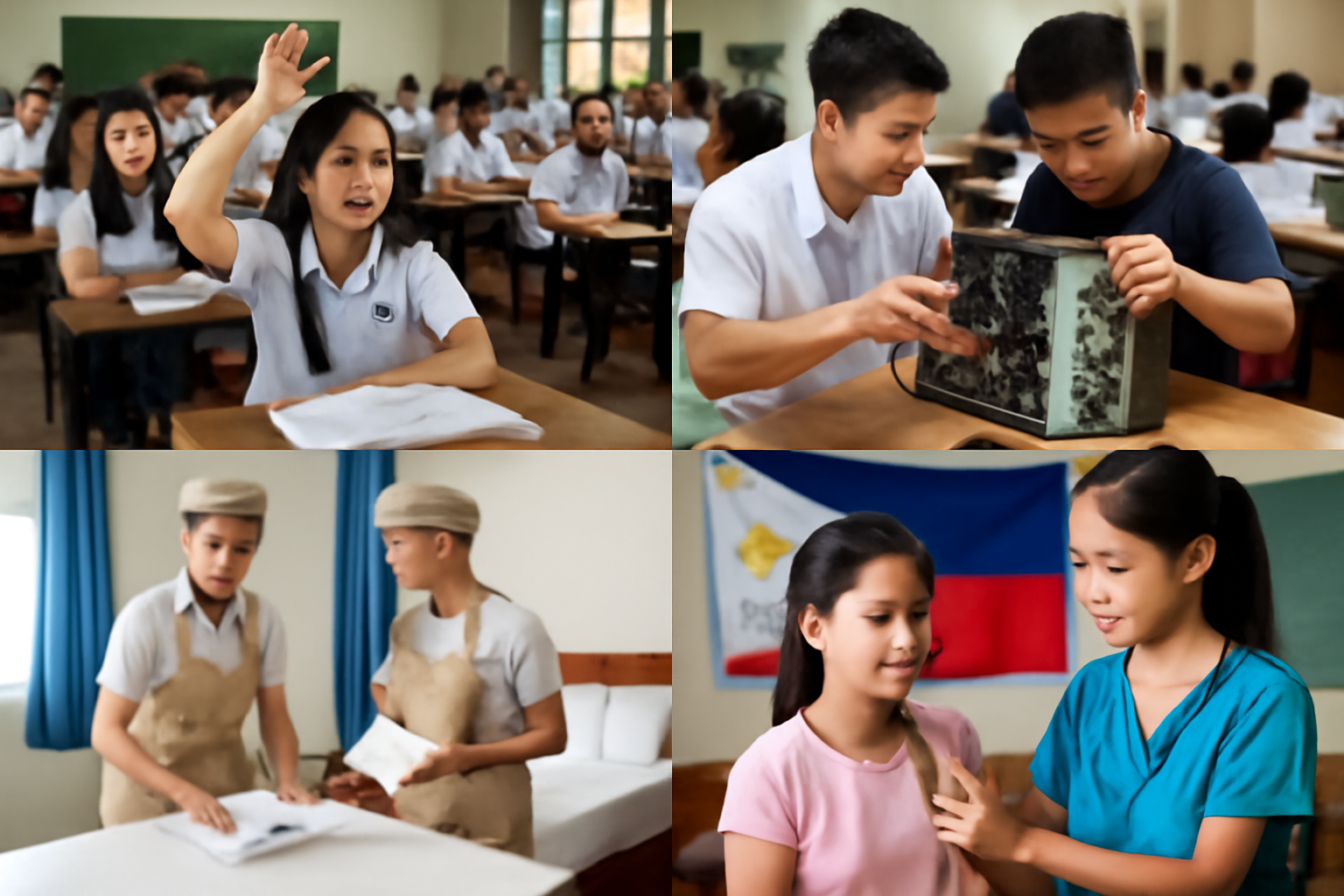
The education system in the Philippines plays a pivotal role in shaping the future of the nation’s youth. As the country strives to remain competitive in a globalized world, educational reforms and investments are essential in preparing students to meet the challenges of an ever-evolving economy. In recent years, the Philippines has worked to improve its education system, focusing on providing quality education that equips students with the necessary skills to succeed.
One of the most significant changes in the Philippine education landscape was the implementation of the K-12 program in 2013. This reform extended the basic education cycle from 10 to 12 years, providing students with more time to develop critical skills before entering higher education or the workforce. With the inclusion of kindergarten and two additional years of senior high school, the aim is to ensure that students are more prepared for both college and career opportunities.
Moreover, the Philippine government has made efforts to improve the quality of education by investing in infrastructure, digital learning tools, and teacher training. Schools across the country are increasingly incorporating technology into their teaching methods to create a more dynamic and engaging learning environment. This helps students acquire the necessary skills for the digital age, including critical thinking, problem-solving, and adaptability.
In addition to the national reforms, there is a growing emphasis on technical-vocational education and training (TVET). The Technical Education and Skills Development Authority (TESDA) is an important player in providing students with hands-on training in various technical fields, such as engineering, healthcare, and information technology. TVET programs allow students to pursue practical careers immediately after high school, offering a viable alternative to traditional academic paths.
Despite these advancements, the education system still faces challenges, including disparities in access to quality education between urban and rural areas, and between private and public institutions. There is also the challenge of aligning education outcomes with the needs of the labor market. To address these issues, the government, in collaboration with the private sector, is working to ensure that educational reforms are inclusive and effective in reaching all Filipino learners.
Ultimately, the goal of the Philippine education system is to nurture a generation that is capable, competitive, and ready to contribute to the country’s development. By equipping students with a broad set of skills and knowledge, the Philippines is laying the groundwork for a brighter, more prosperous future.