








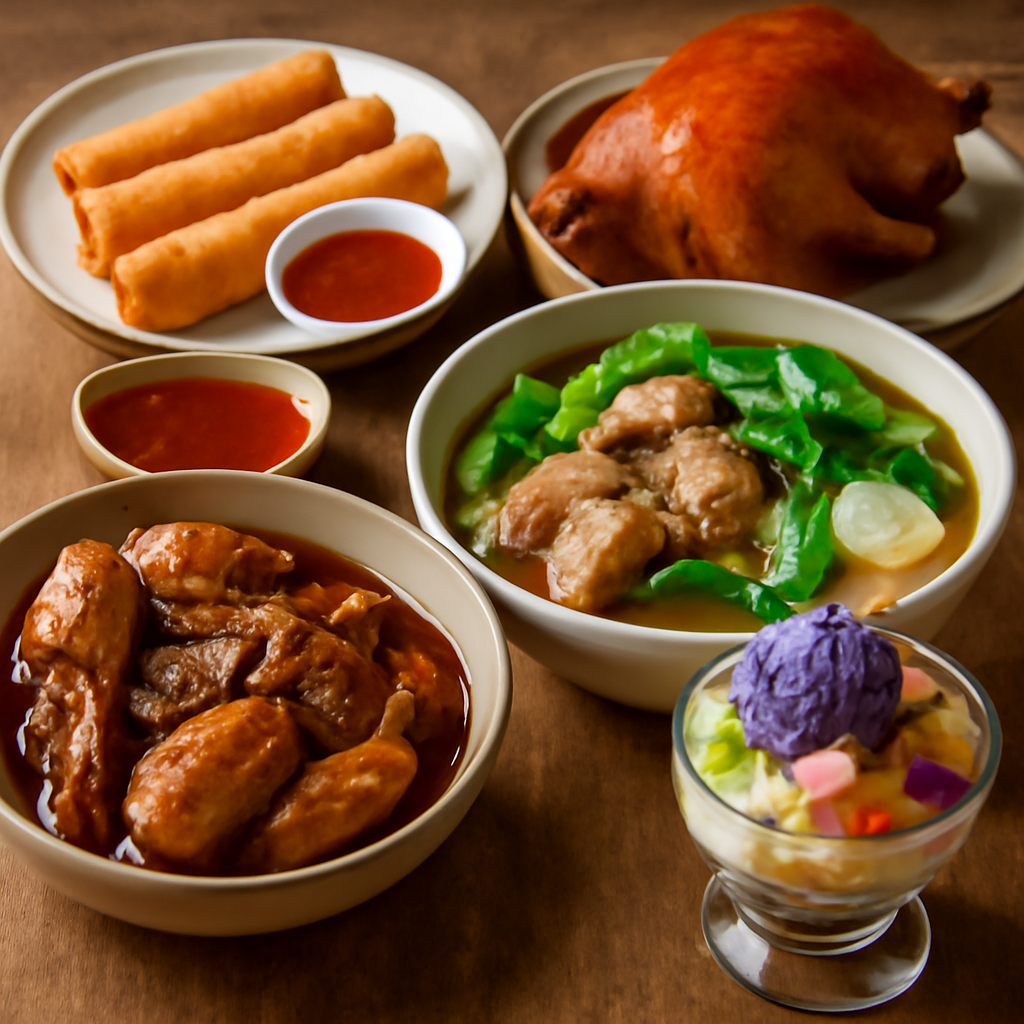
The Philippines, a country rich in culture and tradition, boasts a diverse culinary landscape. Each region in the Philippines has its own distinctive dishes that not only satisfy hunger but also reflect the history and customs of the area. Filipino food often blends influences from countries that have colonized the nation, such as Spain, China, and America, giving it a unique and diverse flavor.
One of the most famous Filipino dishes is Adobo. This dish is typically made from chicken or pork, simmered in a mixture of soy sauce, vinegar, garlic, and various spices. The slow cooking process allows the meat to become tender and soak up the rich flavors of the marinade. Each family in the Philippines has their own version of Adobo, making it a versatile and beloved dish across the country.
Another popular Filipino dish is Sinigang. Sinigang is a sour soup, often made with pork, fish, or shrimp, and flavored with tamarind as the primary souring agent. It is commonly served with vegetables like water spinach (kangkong), eggplant, and radish, which add texture and flavor. Sinigang is a refreshing dish, perfect for any season, especially when enjoyed with steamed rice.
For rice lovers, Lumpia is a must-try. Lumpia is a dish made from vegetables, meat, or shrimp wrapped in thin pastry and deep-fried until crispy. It is often served as an appetizer or snack, and is typically accompanied by a sweet or sour dipping sauce.
No Filipino celebration is complete without Lechon. Lechon is a whole roasted pig, cooked over an open flame, giving the skin a crispy texture and the meat a tender interior. It is often served at large parties, weddings, and festivals, symbolizing celebration and abundance.
For dessert, Halo-Halo is a popular treat. Halo-Halo is a mixed dessert made from shaved ice combined with a variety of ingredients like beans, fruits, agar-agar, and coconut milk, topped with a scoop of ice cream. It is a refreshing and sweet way to cool off, especially during the hot summer months.
Filipino food is not just about taste; it’s about culture, history, and tradition. Every dish tells a story of the country’s diverse and rich heritage, and a trip to the Philippines will leave you with a lasting impression of its culinary delights.