




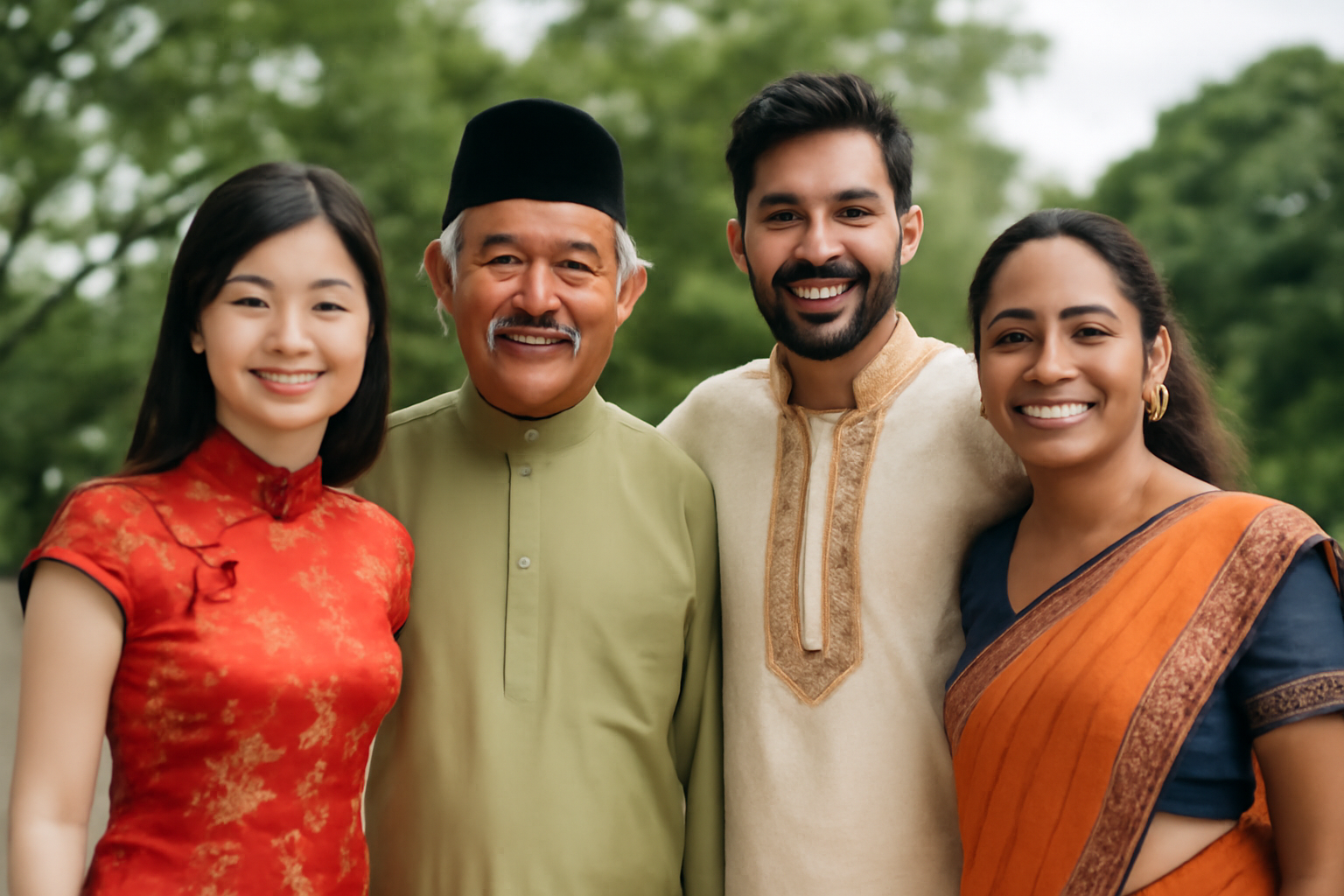
Singapore is widely recognized for its rich ethnic diversity. Despite its small geographical size, the nation is home to a variety of ethnic groups, including Chinese, Malay, Indian, and several other communities. This diversity has shaped Singapore’s unique national identity, where harmony among ethnic groups is celebrated as one of the country’s core values.
Historically, Singapore has been a melting pot of cultures due to its role as a major international port and trading hub. The Chinese community, for example, arrived in waves from various regions of China, including Fujian and Guangdong, bringing their distinct customs, languages, and traditions. Similarly, the Malay community, who settled along the coastal regions, brought with them the Islamic faith and a rich cultural heritage. The Indian community, on the other hand, introduced Hinduism, Buddhism, Sikhism, and their culinary and artistic practices.
However, despite the diverse makeup of Singapore, achieving unity among its different ethnic groups was initially a challenge. Since its independence in 1965, the government has implemented policies that embrace inclusivity and tolerance. A notable example is the housing policies implemented by the Housing and Development Board (HDB), which ensures that ethnic groups live side by side in residential areas. This fosters interaction and understanding among communities, helping to prevent social segregation.
The multicultural nature of Singapore is also evident in its festivals, such as Chinese New Year, Hari Raya Puasa, and Deepavali, which are celebrated by people from different ethnic backgrounds. These shared cultural celebrations highlight the importance of unity and mutual respect.