





The Philippines faces significant threats from climate change due to its geographic location and diverse topography. Positioned in the typhoon belt and along the Pacific Ring of Fire, the country experiences a high frequency of natural hazards, including typhoons, floods, landslides, and volcanic eruptions. These environmental changes are compounded by rising global temperatures and altered weather patterns, which intensify the severity of disasters and challenge traditional coping mechanisms.
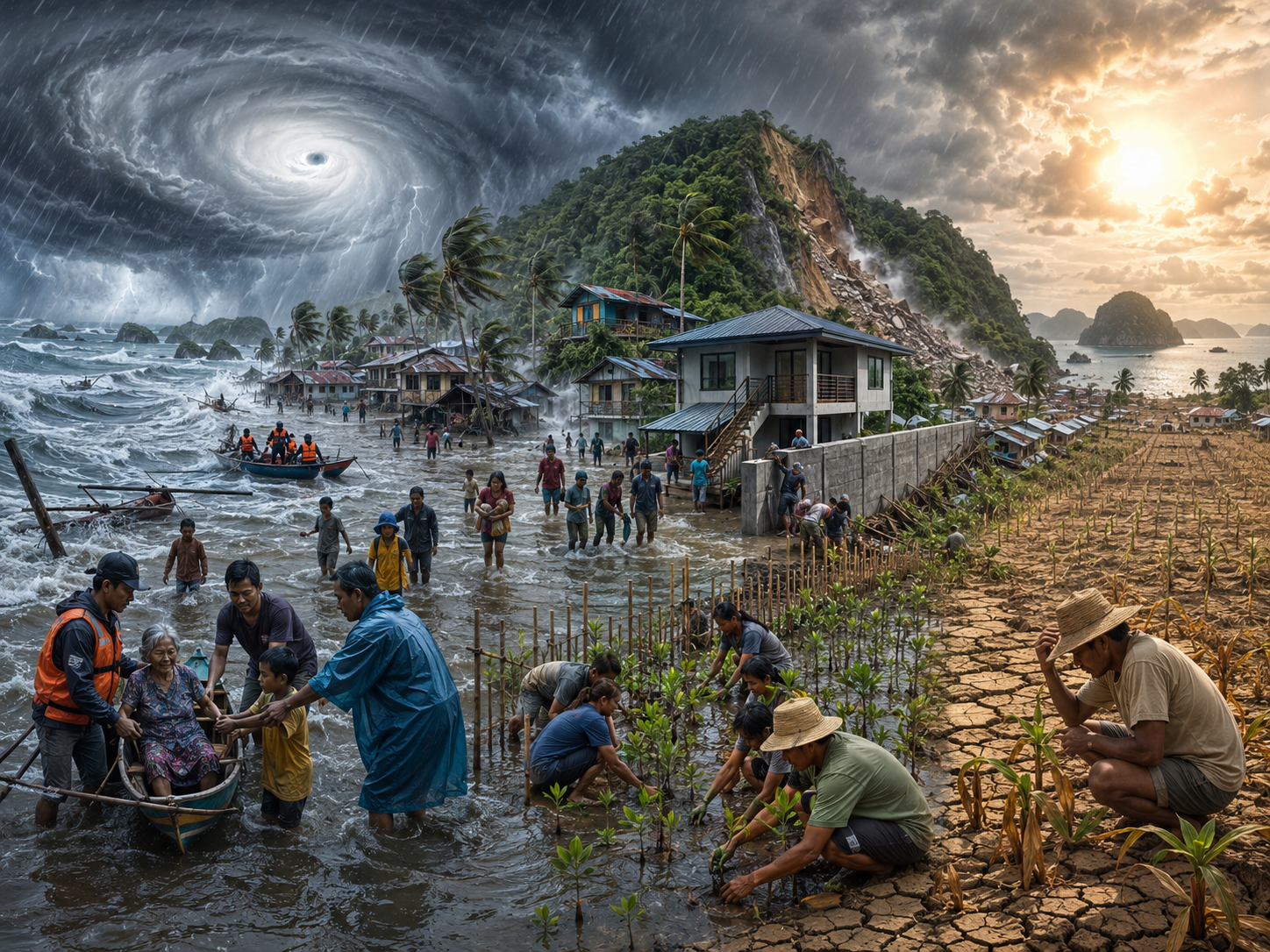
Typhoons are among the most destructive hazards in the Philippines. On average, about 20 tropical cyclones enter the Philippine area of responsibility each year, and several of these are strong enough to cause catastrophic damage. Scientific studies indicate that climate change is increasing the intensity of these storms, resulting in heavier rainfall, stronger winds, and more extensive flooding. Coastal towns and low-lying islands are particularly vulnerable, with communities often facing displacement, property damage, and livelihood loss due to storm surges.
Rising sea levels also exacerbate flooding and threaten coastal ecosystems. Mangrove forests and coral reefs, which act as natural barriers against storm surges, are under pressure from both human activity and environmental stress. Their degradation leaves coastal populations more exposed to the destructive effects of typhoons and rising tides. Additionally, prolonged drought periods have begun affecting agricultural regions, reducing yields for rice, corn, and other essential crops. Farmers face increased uncertainty, impacting food security and rural incomes.
The Philippine government has prioritized disaster risk management to mitigate the impact of climate-related hazards. Agencies such as the National Disaster Risk Reduction and Management Council (NDRRMC) have implemented early warning systems, community evacuation programs, and emergency response protocols. Local governments invest in climate-resilient infrastructure, including reinforced buildings, flood diversion channels, and evacuation centers, to reduce fatalities and property damage during extreme events.
Community involvement is essential for strengthening resilience. Citizens are trained in emergency procedures and participate in environmental restoration projects such as reforestation and shoreline rehabilitation. These initiatives not only reduce the physical impact of disasters but also foster social cohesion, enabling communities to support each other in times of crisis. Non-governmental organizations supplement these efforts by providing disaster education, resources, and technical assistance to vulnerable areas.
International partnerships also play a crucial role in enhancing the country’s adaptive capacity. The Philippines benefits from climate funding, technology transfer, and technical expertise provided by organizations such as the United Nations and the World Bank. Projects range from renewable energy development to advanced disaster monitoring systems, helping the country prepare for the increasing frequency and intensity of climate-related hazards.
Adapting to climate change in the Philippines requires a coordinated approach that combines government policy, local action, and global cooperation. Strengthening infrastructure, protecting ecosystems, and empowering communities are vital steps toward building resilience. With the right measures in place, the nation can mitigate the risks posed by natural disasters and better safeguard its population and economy against the challenges of a changing climate.