






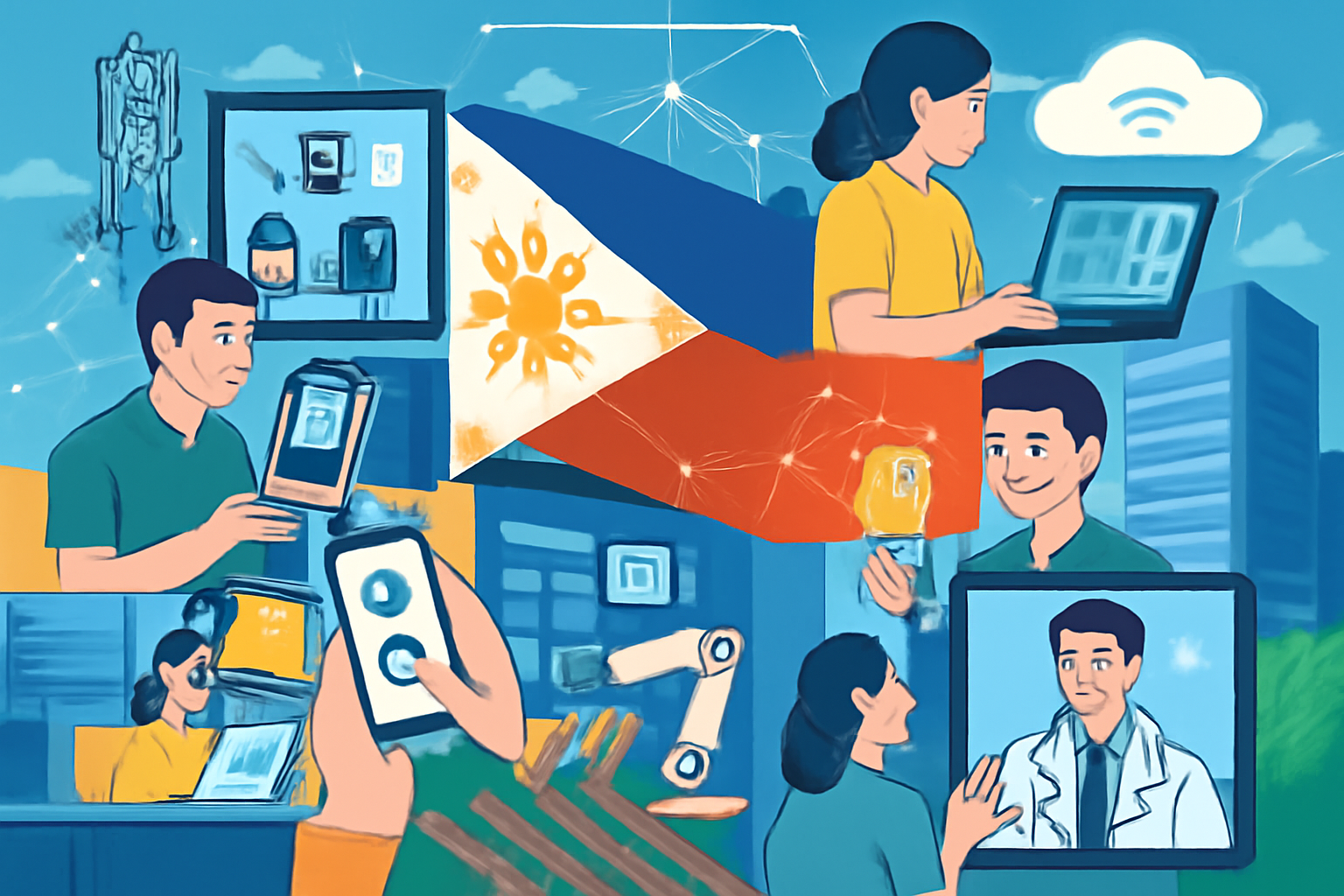
The Philippines has undergone significant digital transformation in recent years, driven by rapid technological advancements and innovation. As one of Southeast Asia’s fastest-growing economies, the country is leveraging technology to reshape various sectors, including business, education, healthcare, and government. This digital transformation is not just a trend but a critical shift to improve the nation’s global competitiveness and to provide better services to its citizens.
One of the most significant driving forces behind the Philippines’ digital transformation is the government’s initiative to promote technology adoption across different industries. The Philippine government has introduced various programs aimed at enhancing the country’s digital infrastructure. For instance, the National Broadband Plan (NBP) and the Free Wi-Fi Internet Access Program are strategic initiatives designed to provide high-speed internet access across the nation, even in remote areas. This connectivity is essential to fostering innovation and ensuring that every Filipino can take part in the digital economy.
In addition to infrastructure, the government is actively pushing for the adoption of digital platforms in education. The Department of Education (DepEd) and the Commission on Higher Education (CHED) have made substantial strides in integrating e-learning systems and digital classrooms, allowing students and educators to engage remotely and access resources digitally. This shift became particularly crucial during the COVID-19 pandemic, where online learning became the primary method of education delivery.
The rise of e-commerce in the Philippines is another prime example of how digital technologies have reshaped industries. Filipino consumers have embraced online shopping platforms, which has opened doors for small businesses to reach larger markets and thrive. Companies like Lazada, Shopee, and Zalora have seen rapid growth, offering a wide array of products and services to the Filipino public. The surge in e-commerce also spurred the expansion of digital payment systems, such as GCash and PayMaya, which have simplified financial transactions and increased financial inclusion.
Innovation in the tech sector is also visible in startups that are reshaping industries such as fintech, health tech, and agritech. Fintech companies, for instance, are providing innovative solutions to the underbanked population, while health tech startups are introducing telemedicine services that allow patients to access healthcare remotely. Agritech innovations are improving farming practices, enabling farmers to optimize crop production and reduce costs.
On the corporate front, businesses in the Philippines are adopting advanced technologies such as artificial intelligence (AI), big data, and cloud computing to enhance productivity and optimize operations. Many companies are also increasingly focusing on digital marketing strategies to reach customers more effectively. These technological advancements are helping Filipino businesses compete in the global marketplace and ensuring that they stay relevant in an ever-evolving digital economy.
Despite the progress, the Philippines still faces several challenges in fully realizing its digital potential. Issues such as digital literacy, data security concerns, and the uneven distribution of technology across urban and rural areas must be addressed to create an inclusive digital economy. The government, together with private sectors, is working on initiatives to tackle these obstacles, ensuring that no one is left behind as the country continues its digital journey.
The future of technology and innovation in the Philippines looks promising. With continuous government support, an emerging tech-savvy population, and a growing startup ecosystem, the Philippines is poised to become a leader in digital transformation in Southeast Asia.