








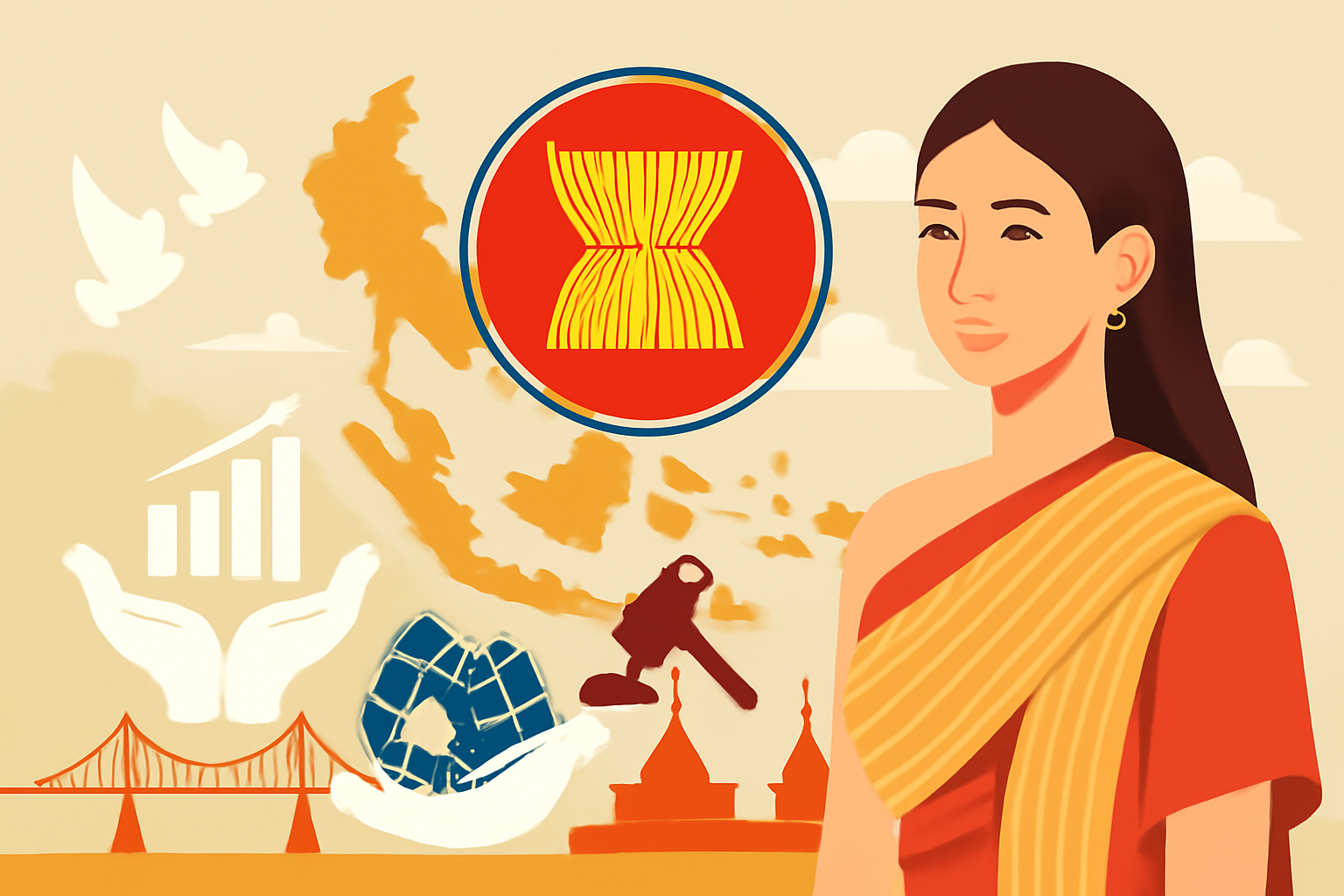
Thailand plays a pivotal role in the Association of Southeast Asian Nations (ASEAN), serving as both a diplomatic hub and a driving force in regional cooperation. As one of the founding members of ASEAN in 1967, Thailand has been at the forefront of regional integration, contributing significantly to the stability, peace, and economic growth of Southeast Asia.
A key aspect of Thailand’s involvement in ASEAN is its diplomatic approach. Thailand has consistently advocated for dialogue and peaceful conflict resolution among member states. This is particularly evident in its efforts to mediate disputes and facilitate negotiations, which are central to ASEAN’s goal of maintaining peace in the region. In this regard, Thailand’s diplomatic strategy emphasizes mutual respect, non-interference, and the promotion of consensus-based decision-making. These principles align well with ASEAN’s foundational principles, where diplomacy and dialogue play crucial roles in managing tensions and fostering cooperation.
One of Thailand’s major contributions to ASEAN is its active participation in the establishment and strengthening of ASEAN-led forums. The ASEAN Regional Forum (ARF), the East Asia Summit (EAS), and the ASEAN Defense Ministers’ Meeting-Plus (ADMM-Plus) are just a few examples of multilateral platforms where Thailand has taken leadership roles. These forums have allowed Thailand to enhance regional security cooperation, address transnational issues like terrorism, climate change, and human trafficking, and foster stronger diplomatic ties with global powers like China, the United States, and India.
Economically, Thailand has been an advocate for the ASEAN Economic Community (AEC), which aims to create a single market and production base. Thailand’s robust economic performance and trade relations within ASEAN have helped to shape the regional economic landscape. As a key exporter and an investment hub, Thailand supports initiatives to increase intra-ASEAN trade and investment, which strengthens the collective bargaining power of the bloc.
Additionally, Thailand’s diplomatic influence extends beyond economic and security matters. It has consistently championed initiatives that promote cultural exchange and people-to-people connectivity within ASEAN. These initiatives include educational exchanges, tourism cooperation, and the promotion of ASEAN’s collective identity, all of which are vital for the long-term success and unity of the organization.
In conclusion, Thailand’s role in ASEAN is multifaceted and vital. Through its diplomatic leadership, active participation in regional cooperation forums, and economic contributions, Thailand has proven itself to be a cornerstone of ASEAN’s efforts to promote peace, stability, and prosperity in Southeast Asia.