





Singapore’s transportation system stands as one of the most advanced in the world, characterized by high levels of efficiency, innovation, and a commitment to sustainability. The city-state’s integrated transportation network comprises buses, trains, taxis, and the iconic Mass Rapid Transit (MRT), all working harmoniously to cater to the needs of its 5.6 million residents. With a heavy focus on reducing traffic congestion, lowering carbon emissions, and promoting sustainable practices, Singapore has become a global model for smart urban mobility.
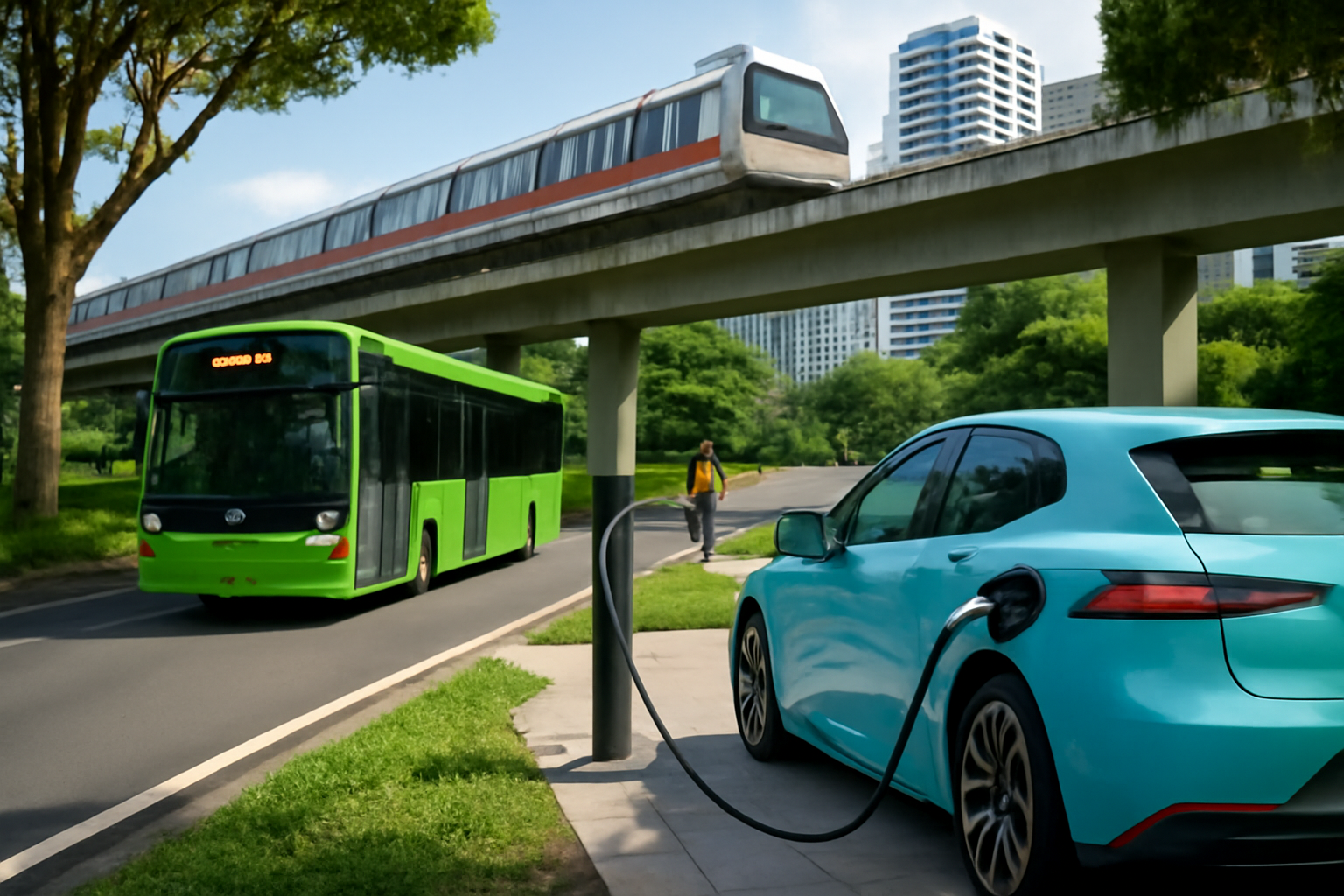
One of the key features of Singapore’s transportation system is its efficient use of public transport. The MRT, which is the backbone of the system, serves millions of commuters daily with its high-frequency services, making it a reliable mode of travel. The convenience and punctuality of the MRT network are complemented by an extensive bus service that covers nearly every corner of the island. Buses are integrated with the MRT system, allowing seamless transfers between the two modes of transport through a unified fare system.
Sustainability plays a central role in Singapore’s transportation strategy. The government has been proactive in promoting eco-friendly transport options. Electric buses, for example, are gradually replacing traditional diesel-powered buses, significantly reducing carbon emissions. Additionally, Singapore aims to phase out all petrol and diesel vehicles by 2040, encouraging the use of electric vehicles (EVs). The government has also incentivized the installation of EV charging stations across the island, making the switch to electric mobility more accessible.
In an effort to manage congestion, Singapore employs a unique pricing mechanism called the Electronic Road Pricing (ERP) system. This system charges vehicles based on the distance traveled and the time of day, with higher rates during peak hours. By adjusting pricing dynamically, the ERP system ensures that traffic flow is optimized and congestion is minimized. This has resulted in smoother traffic and reduced environmental impact compared to cities that rely solely on traffic fines.
Further demonstrating its commitment to sustainability, Singapore has invested heavily in green infrastructure. The city boasts an extensive network of cycling paths, promoting eco-friendly commuting options. The government has also introduced initiatives such as the Green Mark certification for buildings, encouraging developers to construct energy-efficient and sustainable structures that reduce dependence on fossil fuels.
In conclusion, Singapore’s transportation system serves as a shining example of how efficiency and sustainability can go hand in hand. By prioritizing innovation, eco-friendly practices, and a seamless integration of different modes of transport, Singapore is setting a global standard for sustainable urban mobility.