






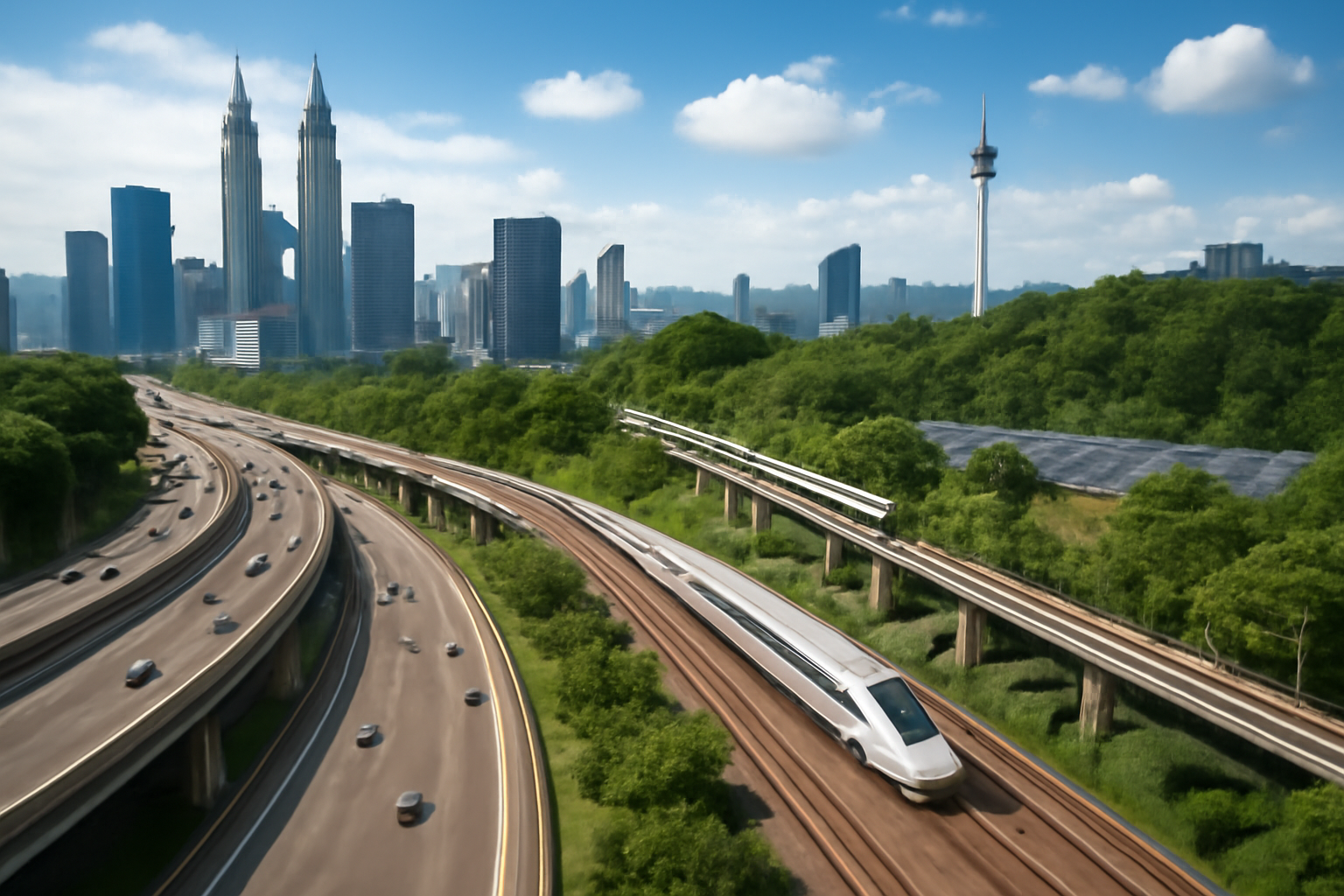
Infrastructure is the backbone of any nation’s growth and prosperity, and Malaysia’s commitment to developing its infrastructure is a key driver for its continued progress. With diverse regions, distinct states, and varying topographies, Malaysia’s infrastructure development is an essential strategy to link different regions and enhance economic opportunities.
Connecting the States
One of the primary goals of infrastructure development in Malaysia is to connect its states, whether urban or rural. The expansion of the road network, including highways such as the North-South Expressway, has dramatically improved connectivity between the Peninsula’s southernmost and northernmost points. These infrastructures not only reduce travel time but also encourage the movement of goods and services, fostering trade and commerce between different regions.
In addition to roads, Malaysia has invested heavily in air and sea transport. Airports like Kuala Lumpur International Airport (KLIA) and Penang International Airport serve as vital international gateways. Sea ports, including Port Klang and Port of Tanjung Pelepas, are also critical hubs for trade in Southeast Asia, supporting Malaysia’s position as a regional economic leader.
Advancing the Future of Malaysia’s Economy
Infrastructure development is a critical enabler for economic growth. By linking urban centers with rural areas, infrastructure opens new avenues for businesses to thrive. For example, the development of industrial parks and new towns has facilitated economic expansion, especially in states like Johor and Perak. The construction of mega-projects such as the East Coast Rail Link (ECRL) and the Malaysia-Singapore High-Speed Rail (HSR) promises to significantly reduce travel time between regions, improving the flow of goods and people across the nation.
Moreover, the development of digital infrastructure is equally essential in Malaysia’s move towards becoming a digital economy. The rollout of 5G technology and improvements in broadband access are key to ensuring that all Malaysians, regardless of their location, have access to the tools necessary for education, work, and personal growth.
Sustainable Infrastructure: A Look at the Future
Looking to the future, Malaysia aims to develop sustainable infrastructure that balances growth with environmental responsibility. Green building initiatives, renewable energy projects, and eco-friendly public transport systems such as the Light Rail Transit (LRT) are all part of Malaysia’s strategy to reduce its carbon footprint while continuing to enhance connectivity across the nation.
As Malaysia moves forward, infrastructure development will continue to be a cornerstone of its national growth strategy, ensuring that both current and future generations can benefit from an interconnected and prosperous country.